AI agents and your bank login: what MAS and Singapore's banks say
AXS is opening bill payments to AI agents, while MAS cautions against sharing financial logins. For business owners, the key decisions are who carries a loss, what the agent can do and who approves payment.
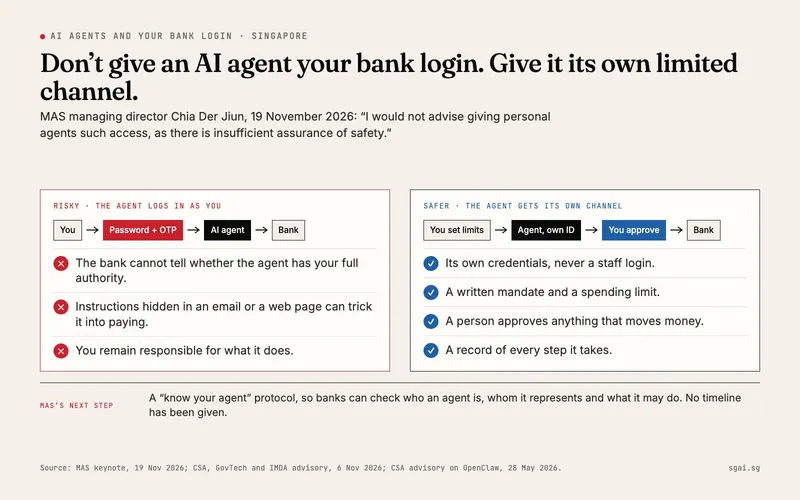
On 19 November 2026, the managing director of the Monetary Authority of Singapore (MAS) said he "would not advise" giving personal artificial intelligence (AI) agents your financial logins. 12 An AI agent is software that takes actions on your behalf, unlike a chatbot that only answers. 3
The day before, AXS said it is opening its network of more than 800 Singapore billers to AI agents. 4 It gave no date for consumers. 5
So agents that pay bills are on their way, but the regulator and the banks want your login kept away from them. For a business there is a twist: a company account gets less protection than a personal one. 67 This guide explains who would carry a loss, what access to allow and where a person must still press "approve".
What did MAS say about AI agents and your bank login?
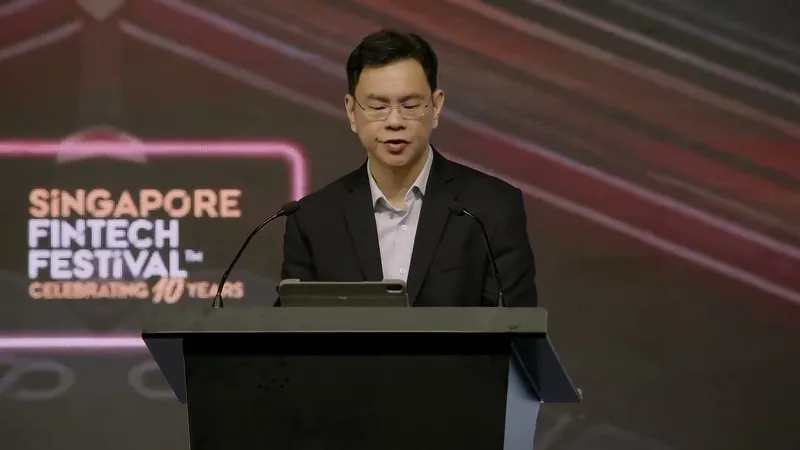
Chia Der Jiun, MAS's managing director, told the Singapore FinTech Festival that "some users are giving agents their login credentials to financial accounts". 12 "I would not advise giving personal agents such access, as there is insufficient assurance of safety," he said. 2
Login credentials means your username, password and one-time passwords (OTPs), the temporary codes that approve a login or payment. 89 On 6 November, three government agencies said never to give any of them to an AI agent. 108 They are the Cyber Security Agency of Singapore (CSA), the Government Technology Agency of Singapore (GovTech) and the Infocomm Media Development Authority (IMDA). 10
Chia's worry is that a bank cannot tell whether an agent logging in as you has your full authority. 11 Nor can it tell whether the agent is staying within its mandate: the job and limits you gave it. 1112 He then asked who bears responsibility "if agents transact incorrectly or beyond their instruction". 11 That is the question to settle before you connect anything.
MAS's answer is a plan, not a rule. It will "facilitate the development of know your agent protocol", a way for an agent to tell a bank who it is and what it may do. 1314 Chia gave no timeline. 15 The protocol is part of the new phase of SAFR (Safeguards for Agentic Finance at Runtime), an industry white paper MAS announced in July. 1316
MAS and the Future of Finance Institute (FFI) are also setting up a sandbox, a controlled test environment, for agent payments and corporate treasury management. 1718 No start date was given. 18 Neither is something your finance team can switch on today.
What happened, when
| Date | What happened | Announced or in effect? |
|---|---|---|
| 16 Dec 2024 | Current versions of Singapore's two payment-protection guidelines take effect | In effect |
| 13 Nov 2025 | Chia says consumer agents need "sufficient guardrails" | Speech |
| 16 Feb 2026 | DBS and Visa pilot agent card payments | Bank-run pilot |
| 20 May 2026 | IMDA's framework for organisations using AI agents | Guidance |
| 28 May 2026 | CSA's OpenClaw advisory: human approval for payments | Guidance |
| 3 Jul 2026 | MAS announces the SAFR white paper | Industry white paper |
| 6 Nov 2026 | Government advisory on personal AI agents; OCBC's results briefing | Guidance, not law |
| 13 Nov 2026 | The three banks' stance reported; OCBC's own assistant reported | Bank positions |
| 18 Nov 2026 | AXS announces agent bill payments; Visa demonstration; sandbox announced | No consumer date; no start date |
| 19 Nov 2026 | Chia's login warning and know your agent plan | No timeline |
What this means for you: This is advice, not a ban, but it comes from your regulator. Keep your login to yourself; as Chia put it, "Autonomy has to be bounded." 27
What are DBS, OCBC and UOB telling customers?
All three banks are cautious, in different ways. The Business Times reported on 13 November that they are warning customers against using AI agents, though none has yet seen customers using them. 24
OCBC will not allow third-party agents to interact with the bank, such as to move money out on their own, group chief executive Tan Teck Long said, according to the paper. 28 At OCBC's 6 November results briefing, a reporter mentioned US banks blocking agents and asked whether OCBC had seen clients try to reach their accounts through them. 23 The bank's answer, in its own recording: "So we haven't seen that. But for us, because we are prudent, we actually wouldn't allow that." 23 The recording does not say who was speaking. 29
DBS chief executive Tan Su Shan said DBS "actively discourages customers from sharing credentials with and using AI agents". 30 Her reason: "you just don't know how and what (the third-party agents) are going to do with these credentials". 30 DBS is also studying how to allow outside agents for some lower-risk transactions. 31 UOB's group chief financial officer, Leong Yung Chee, said customer use of agents is effectively "ring-fenced". 32
Who says what
| Who | What they said | How solid |
|---|---|---|
| MAS: Chia Der Jiun | "Would not advise" giving personal agents your login | Official speech text |
| OCBC | Will not let outside agents move money out on their own | Press report; bank's own recording |
| DBS | Discourages sharing credentials; studying lower-risk uses | Press report |
| UOB | Customer use of agents is "ring-fenced" | Press report |
| CSA, GovTech and IMDA | Never give agents passwords or OTPs; you remain responsible | Official advisory, not law |
| AXS | Opening more than 800 billers to agents; no consumer date | Company release; press report |
| Visa: Abhijeet Ramesh | Verified agents, tokens, customer approval; dispute rules not yet changed | Company account in a press report |
| Drew & Napier: Cheryl Seah | If a bank bans agents and you use one, the bank may not be liable | Legal opinion in a press report |
| Forrester: Meng Liu | Blocking is not sustainable; expects "controlled delegation" | Analyst opinion in a press report |
Cheryl Seah of law firm Drew & Napier flags a liability risk. 36 If a bank bans agents and a customer uses one anyway, the customer "could be said to have breached the terms of use and the bank is not liable". 36 That is her view, not a ruling, and we did not check each bank's current terms. 3638
Not everyone thinks blocking will last. Forrester analyst Meng Liu said "simply blocking agents is not a sustainable long-term strategy". 37 Liu also said that "the winning model will be controlled delegation, not blanket blocking". 37
The banks are building that controlled route themselves. DBS has piloted agent card payments with Visa through "issuer-controlled flows", run by the bank that issued the card. 20 OCBC has a new assistant, Velocity Smart Assist, for Velocity, the business banking platform used by nearly 200,000 customers in Singapore. 25 It helps them add or remove users and approvers; the report does not say it moves money. 25
What this means for you: Ask your bank, in writing, which agent routes it allows. A bank's own pilot or assistant does not make it safe to give your password to someone else's agent.
Can an AI agent pay your AXS bills yet?
Not yet for consumers. AXS, which says one in three working adults uses it, announced the plan on 18 November but declined to give a consumer roll-out date. 3945 Access to billers is being "progressively rolled out". 4
The billers include hospitals, power companies, telcos, insurers and government agencies such as the Housing Board and the police, The Straits Times reported. 5 Agents connect through AXS's Model Context Protocol (MCP) server, a standard plug that lets AI agents talk to its bill payment service. 40 Visa and Mastercard are working with AXS, alongside a pilot with Grab's AI Assistant. 41 AXS says businesses could also use agents for recurring payment obligations. 42
In a demonstration at the festival, a customer typed a request asking an agent to pay a telco bill. 26 The agent checked the amount and the card with the customer, and a face scan completed the payment. 26
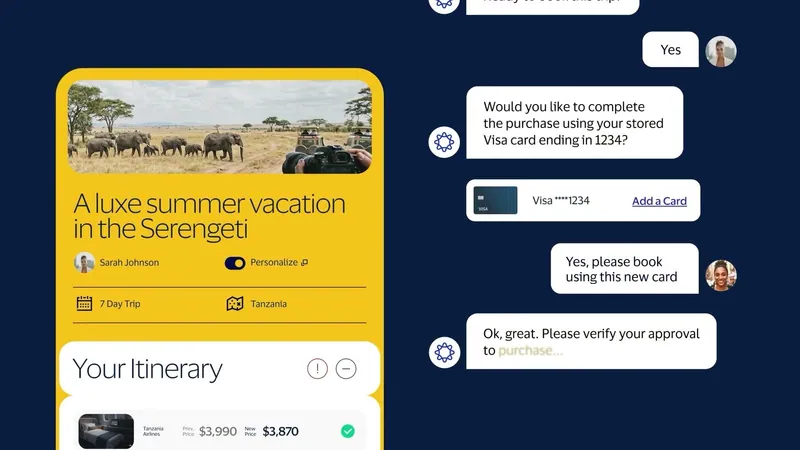
The Straits Times set out Visa's safeguards. Only a verified agent can start a payment, and the card details are not shared with the agent. 34 Instead it gets a token, a stand-in code tied to the customer's device, plus a one-time code for each transaction. 34 A payment of a different amount from the one approved is blocked. 34 Users can also set payment limits, specify permitted transactions and require approval. 43
Disputes will go through Visa's existing framework for card payments, helped by a tamper-proof record of each step the agent takes. 35 "It is still early days, so we haven't made any changes yet, but we are actively working on it," said Abhijeet Ramesh, Visa Asia Pacific's head of innovation and growth products. 35
Our read: this is the opposite of handing over a login. The agent gets a narrow, checkable key, and you still approve each payment. A good record helps in a dispute; it does not promise a refund.
What this means for you: When agent bill payment arrives, check for three things before you switch it on: a limit you set, an approval you give and a record of every step.
Who carries the loss if an AI agent pays wrongly?
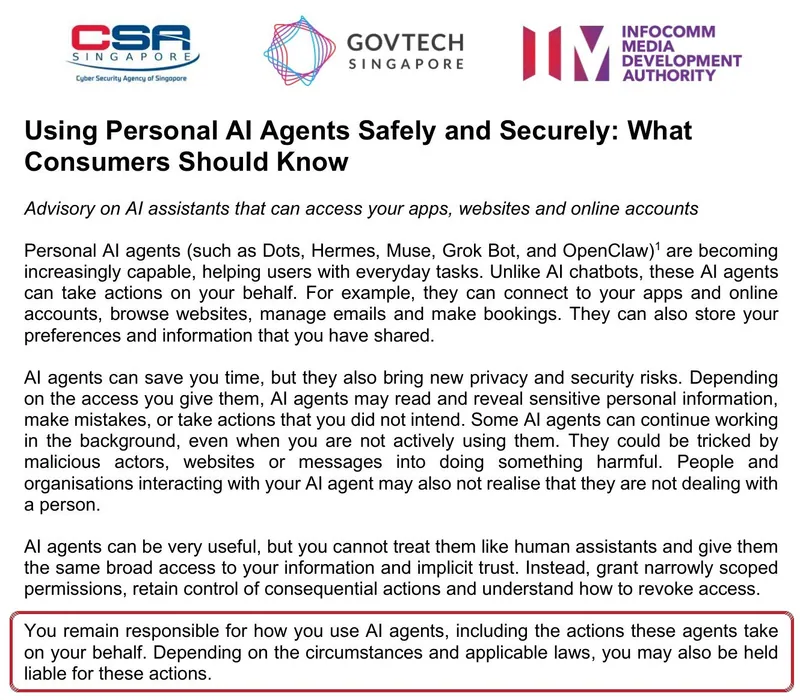
"You remain responsible for how you use AI agents, including the actions these agents take on your behalf," the government advisory says. 33 It adds that you "may also be held liable", depending on the circumstances and the law. 33 An agent is not someone else who picks up the bill.
Two sets of payment-protection guidelines then matter, and both were written to protect individuals. MAS's E-Payments User Protection Guidelines (EUPG) give baseline protection to accounts held by individuals or sole proprietors, people who run a business in their own name. 644 The Shared Responsibility Framework (SRF), from MAS and IMDA, covers accounts held by individuals that were opened with a bank's retail arm or cannot be used for business. 7
The SRF also covers only one defined scam: someone posing as a business or government body tricks you into typing your login into a fake site. 45 In our reading, a payment your own agent got wrong does not fit that definition.
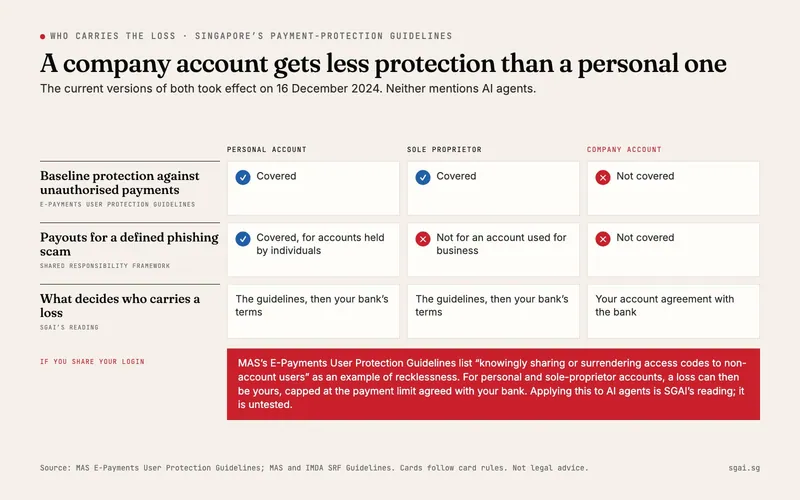
A company's account falls outside both sets of guidelines. 67 For a company, our reading is that your account agreement with the bank decides. Ask the bank, in writing, who would carry a loss caused by an AI agent.
Who carries a loss?
| Situation | Which rule | Who usually carries it |
|---|---|---|
| A fake site steals your login for a personal account | SRF, for its defined scam only | The bank if it breached its duties; for SMS scams, the telco if it did; otherwise you |
| A third party makes an unauthorised payment and you kept to your duties | EUPG | Not you, for the first S$1,000 of loss |
| You gave an agent your password or OTP | The EUPG does not mention agents, so how it applies is unclear | Our reading: possibly you, up to your agreed payment limit |
| You approved the payment yourself | EUPG treats it as authorised | You, up to your agreed transaction or daily limit |
| A company account | Outside both sets of guidelines | Our reading: your account agreement decides |
| An agent pays by card | Card rules, not these guidelines | Visa says its existing dispute framework applies |
The EUPG tells account users not to "voluntarily disclose any access code to any third party". 9 Its examples of recklessness include "knowingly sharing or surrendering access codes to non-account users, resulting in completed transactions". 48 If recklessness was the primary cause of a loss, the loss is yours. 48 If you approved the payment, it counts as authorised, and that loss is yours too. 51
There is one useful lever. In both cases, what you can lose is capped at the transaction or daily payment limit agreed with your bank. 4851 Our advice: lower that limit before any agent goes near the account.
Neither set of guidelines mentions AI agents. 49 They do not say how their rules apply to one, so treating an agent as a "non-account user" is our reading, and how a real dispute would end is unclear. 50
If you disagree with an SRF outcome, you can go to the Financial Industry Disputes Resolution Centre (FIDReC), or to IMDA where a telco is involved. 46 That is a route to argue your case, not a refund.
What this means for you: Check whose name the account is in before you count on any protection. Then lower your payment limit: it caps what an agent can move and, on a personal or sole-proprietor account, what you can lose.
What does "know your agent" mean for your business?
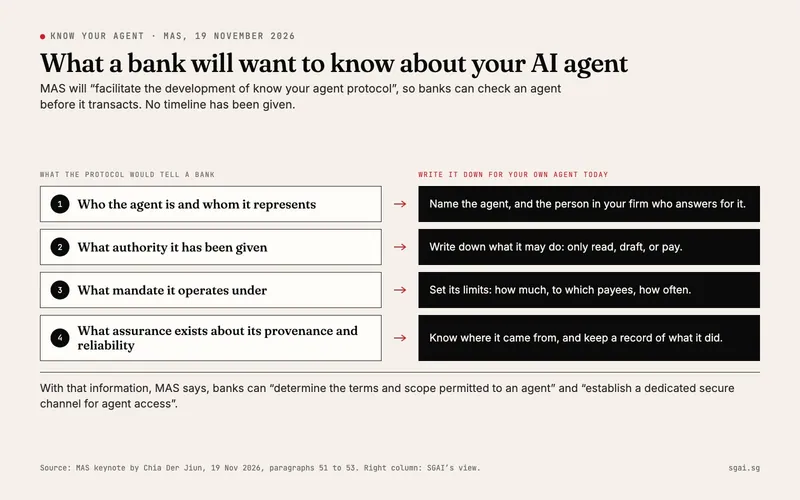
MAS's planned protocol would tell a bank four things about an agent. 14 They are who it is and whom it represents, its authority, its mandate, and where it comes from and how reliable it is. 14 With that, banks could "determine the terms and scope permitted to an agent" and set up a dedicated, secure channel for it. 53
Chia's lessons from SAFR read like a job description. He said "mandates need to be clear and specific: actions that are permissible, limits, conditions". 12 He added that "the greater the discretion and impact of action given an agent, the stronger the assurance and controls needed". 54
Our suggestion: write that job description now, without waiting for the protocol. Name the agent and the person who answers for it. Write down what it may do, whom it may pay, its ceiling, when its permission ends and who approves.
For organisations, CSA's advisory on the OpenClaw agent goes further. It says to "Use dedicated credentials for the agent" and to "Ensure all agent actions are logged and attributable". 55 Human approval for financial transactions should be enforced by system settings, "not just prompt-layer instructions". 22 In plain English: typing "ask me first" into a chat is not a control. 56
IMDA adds that an agent's permissions should be scoped, limited in time and follow "the principle of least privilege", meaning only the access the job needs. 57 Its framework describes Terminal 3, a Hong Kong data privacy firm whose human resources director issues its payroll agent a credential before each monthly run. 58 The credential sets which staff records the agent may see, the expense thresholds and "the ceiling amount for the consolidated bank transfer". 58
What this means for you: Give every agent its own credentials, a written mandate and a hard ceiling. A promise in a chat window is not a control.
How should a business let AI help with payments?
Our recommended order is simple:
- Decide who carries a loss. Know your account type and get your bank's answer in writing.
- Give the agent its own limited channel. Its own credentials, a written mandate and a payment limit, never a staff login. 551257
- Keep a human click. A person approves before money moves, enforced by the system. 2259
- Keep the record. Save the instruction, the proposed payment, the approval and the outcome. 55
One supplier invoice, two set-ups
Our invented scenario: an emailed invoice hides instructions to pay a different account. It mirrors the advisory's warning that agents can be tricked by instructions hidden in emails and documents. 60 The right-hand column is our design, not any product: bank-approved access, fixed payees, enforced limits and a person who releases each payment.
| Step | Agent with your login | Agent with its own limited channel |
|---|---|---|
| How it gets in | As you, with your password | With its own permitted access |
| What it can pay | Anything your login can pay | Only the payees and limits you set |
| Who approves | Nobody, unless you check | A person, before release |
| The hidden instruction | Could make it pay the wrong account | A new payee is refused; a person still approves |
| The record | Looks as if you did it | Instruction, agent action and approval kept |
| Who answers for a mistake | You remain responsible | You still do; the controls make a mistake less likely |
Treat approval as a real check on who gets paid, not a button to clear. For a finance team, our suggestion is that one person prepares and another approves. For how fake invoices and payment-change emails work, see our guide to deepfake and fake-invoice scams.
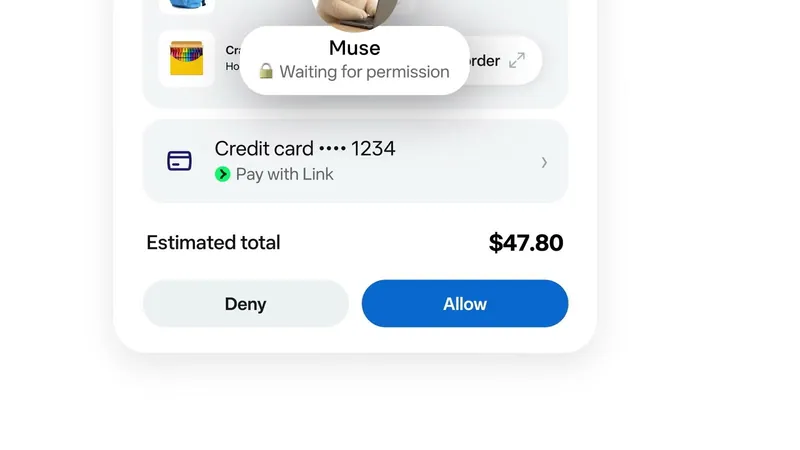
The advisory says to "Choose one-time approval over 'always-allow'". 61 In plain English: approve this payment, not everything that follows. Its illustration uses Meta's Muse agent, and it says that example is "not an endorsement". 62
Your options, compared
Risk and suitability below are our judgement, not product safety ratings.
| Route | How it works | Risk: our judgement | Who approves | Best for |
|---|---|---|---|---|
| Give the agent your login | It acts as you | Highest; we advise against it | Often nobody | Not recommended |
| Agent drafts; a person pays | Staff pay in the bank | Low | Your staff | First invoice trials |
| Your bank's own assistant or pilot | DBS payment pilot; OCBC account assistant | Check the exact scope | The bank's own flow | Customers of that bank |
| Card-network agent payments via AXS, once available | Agent proposes; you confirm by face scan | Check limits and terms | You | Recurring bills |
| Wait for know your agent | A future protocol with no timeline | Not available yet | Not yet defined | Planning ahead |
What this means for you: Let an agent prepare payments long before you let it make them. Expand only when your bank, your approval controls and your loss position are clear.
What to do now
Make the staff rule explicit before anyone experiments. Our suggested starting rule: no agent gets banking credentials, and no agent-prepared payment skips a person's approval.
What to do, by situation
| Your situation | Our suggestion | Check before you go ahead |
|---|---|---|
| You personally, or a sole proprietor, using a personal agent | Keep financial logins out of it | Your payment limit and your account's protection |
| Staff using personal agents with work accounts | Require the employer's permission | Which accounts and tasks are allowed |
| A finance team wanting supplier payments | Start with drafts; a person releases payment | Bank permission, limits and records |
| Recurring bills through AXS | Wait for confirmed access and terms | Approval settings and the card dispute route |
| Something has gone wrong | Stop the agent and revoke its access | Save the activity records first |
If money is at risk, the advisory says to activate the kill switch in your banking app or lock your card. 64 Then call your bank's official hotline and save the agent's activity records before deleting anything. 64 If you are unsure whether something is a scam, the ScamShield Helpline is on 1799, round the clock. 64
For a wider review of who can log in to what, use ten security checks a manager can do. Give one person the job of reviewing agent permissions after any trial, not just setting them up.
Watch our short reel on MAS's warning on Instagram
What this means for you: Let AI cut the paperwork before you let it move money. Keep the login, the final approval and the decision on how much you could lose with your business.
Questions Singapore business owners are asking
What did MAS say about giving AI agents my bank login?
On 19 November 2026, Monetary Authority of Singapore (MAS) managing director Chia Der Jiun said he would not advise giving personal AI agents the login credentials to your financial accounts, as there is "insufficient assurance of safety". Government guidance also says not to disclose usernames, passwords or one-time passwords to agents. Our advice: let an agent prepare work without giving it your banking identity.
Can an AI agent pay my AXS bills now?
AXS announced agent access to its network of more than 800 Singapore billing organisations on 18 November 2026, with services being progressively opened. Visa and Mastercard are working with AXS, alongside a Grab AI Assistant pilot. But AXS gave no consumer roll-out date. Treat this as an announced direction, not a service you can assume is available today.
Does my company bank account get the same protection as my personal account?
Not under these guidelines. MAS's E-Payments User Protection Guidelines cover qualifying accounts held by individuals or sole proprietors. The Shared Responsibility Framework covers qualifying accounts held by individuals, not company accounts. A company account falls outside both. Our recommendation is to ask your bank in writing how its account agreement would allocate an agent-related loss.
Will my bank refund a payment that an AI agent makes wrongly?
There is no blanket answer. Neither set of payment-protection guidelines mentions AI agents, and it is unclear how they would apply to an agent holding your password. MAS's E-Payments User Protection Guidelines make holders of personal and sole-proprietor accounts liable for payments they authorised, up to the payment limit agreed with the bank. Cards follow separate rules, and Visa says agent-payment disputes will use its existing card framework.
How can my business use AI for invoices without sharing a bank login?
Our recommended starting point is to let the agent prepare payment details while a person pays through the bank. For a connected system, government guidance recommends dedicated agent credentials, narrowly limited permissions and attributable activity records. Human approval for financial transactions should be enforced through system controls, not just chat instructions. Ask your bank to confirm that the proposed access channel is permitted.
Sources
- [1]Keynote address by MD Chia Der Jiun at the Singapore FinTech Festival 2026 — MAS, 2026-11-19
- [2]Keynote address by MD Chia Der Jiun at the Singapore FinTech Festival 2026 — MAS, 2026-11-19
- [3]Using Personal AI Agents Safely and Securely: What Consumers Should Know — CSA, GovTech and IMDA, 2026-11-06
- [4]AXS Pioneers Agentic Bill Payments in South-East Asia — AXS, 2026-11-18
- [5]AXS, Visa and Mastercard partner to let AI agents pay bills without multiple app logins — The Straits Times, 2026-11-19
- [6]E-Payments User Protection Guidelines — MAS, 2024-10-24
- [7]Guidelines on Shared Responsibility Framework — MAS and IMDA, 2024-10-24
- [8]Using Personal AI Agents Safely and Securely: What Consumers Should Know — CSA, GovTech and IMDA, 2026-11-06
- [9]E-Payments User Protection Guidelines — MAS, 2024-10-24
- [10]Joint Advisory by CSA, GovTech and IMDA — CSA, 2026-11-06
- [11]Keynote address by MD Chia Der Jiun at the Singapore FinTech Festival 2026 — MAS, 2026-11-19
- [12]Keynote address by MD Chia Der Jiun at the Singapore FinTech Festival 2026 — MAS, 2026-11-19
- [13]Keynote address by MD Chia Der Jiun at the Singapore FinTech Festival 2026 — MAS, 2026-11-19
- [14]Keynote address by MD Chia Der Jiun at the Singapore FinTech Festival 2026 — MAS, 2026-11-19
- [15]Keynote address by MD Chia Der Jiun at the Singapore FinTech Festival 2026 — MAS, 2026-11-19
- [16]MAS Partners Industry to develop Safeguards for AI Agents in Finance — MAS, 2026-07-03
- [17]Keynote address by MD Chia Der Jiun at the Singapore FinTech Festival 2026 — MAS, 2026-11-19
- [18]MAS and Future of Finance Institute Set Out Initiatives in Support of National AI Missions for Financial Services — MAS, 2026-11-18
- [19]Creating the Future of Finance: A Journey of Innovation and Collaboration — MAS, 2025-11-13
- [20]DBS is First Bank in Asia Pacific to Pilot Visa Intelligent Commerce for Everyday Payments — Visa, 2026-02-16
- [21]Model AI Governance Framework for Agentic AI v1.5 — IMDA, 2026-05-20
- [22]Advisory on Cybersecurity Risks of OpenClaw — CSA, 2026-05-28
- [23]3Q26 Media Briefing Recording — OCBC, 2026-11-06
- [24]'Fight AI with AI': Singapore banks warn against third-party AI agents as observers flag liability risk — The Business Times via Singapore Law Watch, 2026-11-13
- [25]OCBC Launches AI Assistant for Business Account Maintenance — Fintech News Singapore, 2026-11-13
- [26]AXS, Visa and Mastercard partner to let AI agents pay bills without multiple app logins — The Straits Times, 2026-11-19
- [27]Keynote address by MD Chia Der Jiun at the Singapore FinTech Festival 2026 — MAS, 2026-11-19
- [28]'Fight AI with AI': Singapore banks warn against third-party AI agents as observers flag liability risk — The Business Times via Singapore Law Watch, 2026-11-13
- [29]3Q26 Media Briefing Recording — OCBC, 2026-11-06
- [30]'Fight AI with AI': Singapore banks warn against third-party AI agents as observers flag liability risk — The Business Times via Singapore Law Watch, 2026-11-13
- [31]'Fight AI with AI': Singapore banks warn against third-party AI agents as observers flag liability risk — The Business Times via Singapore Law Watch, 2026-11-13
- [32]'Fight AI with AI': Singapore banks warn against third-party AI agents as observers flag liability risk — The Business Times via Singapore Law Watch, 2026-11-13
- [33]Using Personal AI Agents Safely and Securely: What Consumers Should Know — CSA, GovTech and IMDA, 2026-11-06
- [34]AXS, Visa and Mastercard partner to let AI agents pay bills without multiple app logins — The Straits Times, 2026-11-19
- [35]AXS, Visa and Mastercard partner to let AI agents pay bills without multiple app logins — The Straits Times, 2026-11-19
- [36]'Fight AI with AI': Singapore banks warn against third-party AI agents as observers flag liability risk — The Business Times via Singapore Law Watch, 2026-11-13
- [37]'Fight AI with AI': Singapore banks warn against third-party AI agents as observers flag liability risk — The Business Times via Singapore Law Watch, 2026-11-13
- [38]'Fight AI with AI': Singapore banks warn against third-party AI agents as observers flag liability risk — The Business Times via Singapore Law Watch, 2026-11-13
- [39]AXS homepage — AXS, 2026-11-22
- [40]AXS Pioneers Agentic Bill Payments in South-East Asia — AXS, 2026-11-18
- [41]AXS Pioneers Agentic Bill Payments in South-East Asia — AXS, 2026-11-18
- [42]AXS Pioneers Agentic Bill Payments in South-East Asia — AXS, 2026-11-18
- [43]AXS, Visa and Mastercard partner to let AI agents pay bills without multiple app logins — The Straits Times, 2026-11-19
- [44]E-Payments User Protection Guidelines — MAS, 2024-10-24
- [45]Guidelines on Shared Responsibility Framework — MAS and IMDA, 2024-10-24
- [46]Guidelines on Shared Responsibility Framework — MAS and IMDA, 2024-10-24
- [47]E-Payments User Protection Guidelines — MAS, 2024-10-24
- [48]E-Payments User Protection Guidelines — MAS, 2024-10-24
- [49]Guidelines on Shared Responsibility Framework — MAS and IMDA, 2024-10-24
- [50]E-Payments User Protection Guidelines — MAS, 2024-10-24
- [51]E-Payments User Protection Guidelines — MAS, 2024-10-24
- [52]E-Payments User Protection Guidelines — MAS, 2024-10-24
- [53]Keynote address by MD Chia Der Jiun at the Singapore FinTech Festival 2026 — MAS, 2026-11-19
- [54]Keynote address by MD Chia Der Jiun at the Singapore FinTech Festival 2026 — MAS, 2026-11-19
- [55]Advisory on Cybersecurity Risks of OpenClaw — CSA, 2026-05-28
- [56]Using Personal AI Agents Safely and Securely: What Consumers Should Know — CSA, GovTech and IMDA, 2026-11-06
- [57]Model AI Governance Framework for Agentic AI v1.5 — IMDA, 2026-05-20
- [58]Model AI Governance Framework for Agentic AI v1.5 — IMDA, 2026-05-20
- [59]Model AI Governance Framework for Agentic AI v1.5 — IMDA, 2026-05-20
- [60]Using Personal AI Agents Safely and Securely: What Consumers Should Know — CSA, GovTech and IMDA, 2026-11-06
- [61]Using Personal AI Agents Safely and Securely: What Consumers Should Know — CSA, GovTech and IMDA, 2026-11-06
- [62]Using Personal AI Agents Safely and Securely: What Consumers Should Know — CSA, GovTech and IMDA, 2026-11-06
- [63]Using Personal AI Agents Safely and Securely: What Consumers Should Know — CSA, GovTech and IMDA, 2026-11-06
- [64]Using Personal AI Agents Safely and Securely: What Consumers Should Know — CSA, GovTech and IMDA, 2026-11-06
How this was made. SGAI's desk picks the story and the Singapore angle and gathers the primary sources. An AI model drafts from those sources only. Every figure is checked against the linked source before Jay Qin reviews and publishes. Spotted an error? Email jay@sgai.sg and we will correct it here, in the open.