How much should a Singapore business spend on AI? Start near S$210 a month for 10 staff
Ramp’s figures for US firms on its platform that pay for AI point to a modest starting budget. Use what you have, prove one job’s savings, and keep a way to change providers.
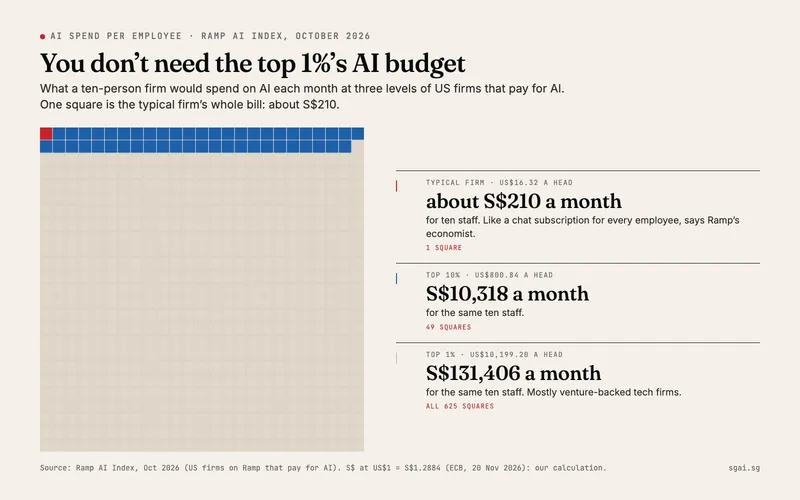
Among US firms on Ramp that pay for artificial intelligence (AI), the typical one spent US$16.32 per employee in October 2026. 1 The top 1% spent US$10,199.20. 1 You do not need the second number.
For a ten-person firm, the typical level works out to about S$210 a month. 2 That is our calculation, at US$1 = S$1.2884, based on European Central Bank reference rates for 20 November 2026. 3 It is a starting reference, not a Singapore average or a quote.
For small and medium-sized enterprises (SMEs), our advice is simple: get everyone using AI before you buy anything bigger.
What do companies really spend on AI?
Ramp runs corporate cards and bill payments. Its index follows businesses on its platform in the United States (US), not all American businesses. 4
These spending figures cover only firms that pay for AI. Typical means the median: the middle firm, not the arithmetic average. The top groups also show the median within each group. 5
Three levels of AI spend
All S$ conversions below are our calculation, using US$1 = S$1.2884 on 20 November 2026. 3
| Level | US$ per employee a month | S$ per employee, our calculation | S$ monthly for ten staff, our calculation | Who spends like this |
|---|---|---|---|---|
| Typical payer | 16.32 | About 21 | About 210 | The middle firm among payers |
| Top 10% | 800.84 | About 1,032 | About 10,318 | The heaviest tenth of payers |
| Top 1% | 10,199.20 | About 13,141 | About 131,406 | Mostly venture-backed tech firms, says Kharazian |
The top 1% spend about 625 times as much per person as typical payers. 10 Their bill is not your shopping list.
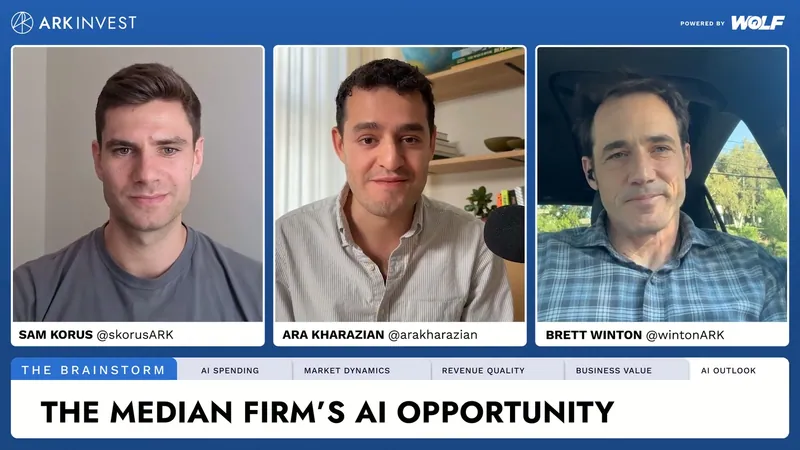
Ramp economist Ara Kharazian says its data “skew toward tech-forward businesses”. 1112 Free tools and employees’ personal accounts are missed, too. 13 These are paid-spending references, not a census of AI use.
Venture capital (VC) means investors funding young, fast-growing firms for an ownership stake. Kharazian describes the top 1% as “by and large VC-backed tech companies”. 9 He also says 1% of businesses drive 80% of AI spending in Ramp’s data. 14
What this means for you: Copy the habit of using AI, not the biggest spender’s bill.
Is S$210 a month worth it?
Kharazian says that for the median firm, “being able to use AI is an absolute edge”. He compares it with a neighbourhood restaurant first trying Google Ads. 15 He expects AI to become “table stakes”: the minimum needed to compete. 16
Discussing September’s roughly US$15 monthly spending per person, he called it “like a chat subscription for every employee”. 17 That is a useful scale, not proof of savings.
Our calculation: US$16.32 × 10 staff × 1.2884 = S$210.27 a month, about S$210, at US$1 = S$1.2884 on 20 November 2026. 32
Assume staff time costs S$30 an hour—our round figure, not an official hourly wage. 18 For context, Ministry of Manpower (MOM) data put the 2025 median gross monthly income of full-time employed residents at S$6,000 for men and S$5,460 for women, including employer Central Provident Fund (CPF) contributions. 19
What the starting budget has to earn back
| Measure | Our example | Meaning for the business |
|---|---|---|
| Monthly AI budget | About S$210 for ten staff | Converted reference, not a quote |
| Staff time cost | S$30 an hour, our assumption | Replace with your own cost |
| Whole-team break-even | 210 ÷ 30 = 7 hours monthly | Time value matching the bill |
| Per-person break-even | About 42 minutes a month, roughly 10 minutes a week | A modest saving to test |
Count time after checking and corrections. Treat saved minutes as valuable only if you put them to useful work.
The evidence deserves caution. A study published by the Ministry of Energy, Trade and Industry (METI) examined firm-level outcomes, not just opinions. 20
Is it worth it? Who says what
| Source | What it says | How solid |
|---|---|---|
| Kharazian, Ramp economist | AI is an “absolute edge” | His judgement, not measured profit |
| MOM survey | 70.7% of AI users report better worker productivity | Firms’ own reports |
| METI study | Revenue and jobs up; no significant productivity or profit gain within four years | Firm-level evidence; data to 2024 |
| Ramp’s caveat | Free tools and personal accounts are missed | Payment data does not capture all use |
METI’s finding means a clear productivity or profit improvement was not established—not that every firm gained nothing. Its data ends in 2024, so it cannot settle what today’s tools deliver. 2324
MOM’s April 2026 release says 71.5% of private-sector firms with at least ten employees had not adopted AI. 2627 Adoption was 23.9% below 25 employees, versus 76.4% above 500. 2829 Its August reply put adoption among firms below 200 staff at 27.2%. 29 Our read: starting now is not obviously late.
High implementation costs, cited by 44.9%, and missing in-house expertise, at 42.4%, led the barriers. 30 A small, known bill addresses the first worry; learning time addresses the second.
What this means for you: Test a modest budget against actual time saved. Neither a survey nor an economist can guarantee your return.
Why Big Tech’s AI budgets are not your benchmark

On the Cheeky Pint podcast, Mark Zuckerberg said Meta was going to “write this check for like, I don't know, like $100 billion or $200 billion”. 31 Then: “I'm like, Alex, you sure this is going to work?” 31 Alex is Alexandr Wang, Chief AI Officer of Meta Superintelligence Labs. 32
Alphabet, Amazon, Meta and Microsoft plan more than US$740 billion in capital spending this year, TechCrunch reports. 33 Capital spending is money for long-lasting assets such as data centres. 32 They are building infrastructure; you are buying help with work.
Meta and Alphabet reported negative free cash flow in the third quarter: the cash left after running the business and paying for investment. Meta’s was negative US$2.12 billion and Alphabet’s negative US$9.07 billion. 3435 Microsoft was the exception among the four, remaining positive. 36
CNBC reported that Alphabet fell nearly 13% on 29 October, its biggest fall since going public in 2004. 35 Roughly US$500 billion of market value disappeared. 35 Even enormous businesses face scrutiny over these bets.
Our view: they can afford a guess. An SME’s AI spending should pay for itself within a quarter.
What this means for you: Judge your budget by work improved, not by technology-company spending headlines.
A three-level AI budget for a Singapore SME
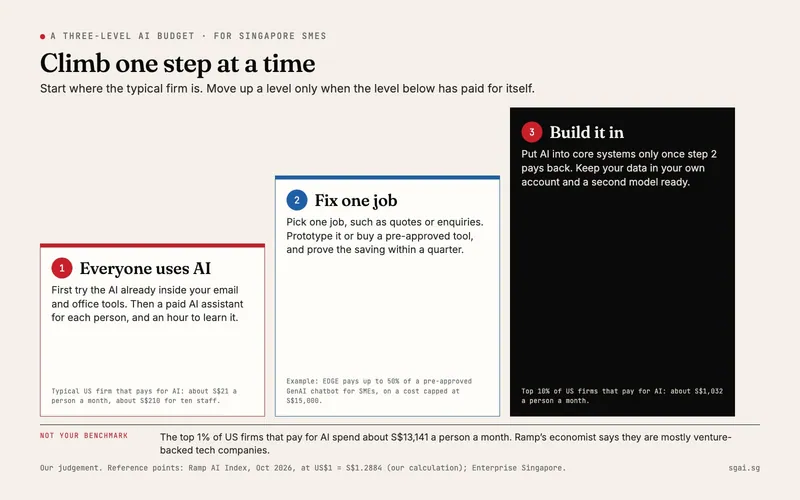
This ladder is our judgement, not a spending requirement. A prototype is a rough working version to test. A model is the AI software producing the answers.
Converted references use US$1 = S$1.2884 on 20 November 2026 and are our calculation. 3
Your AI budget ladder
| Level | What you buy | Cost reference | Move up when |
|---|---|---|---|
| 1: Everyone uses AI | Try included AI first; then a paid assistant per person and an hour to learn | About S$21 per person; S$210 for ten staff | Our rule: people use it and recover its cost |
| 2: Fix one job | Prototype quotes, enquiries or reports; or buy a pre-approved tool | EDGE chatbot support: up to 50%, S$7,500; activity cost capped at S$15,000 | Our rule: prove the saving within a quarter |
| 3: Build it in | AI in core systems; data in your own account; second model ready | Top-10% reference: about S$1,032 per person monthly | Our rule: enter only after Level 2 pays back |
The top-1% reference is about S$13,141 per person monthly, our calculation at the rate above. 8 Those firms are mostly venture-backed technology businesses, according to Kharazian. 9 For most SMEs, that is not a useful target.
Do not skip a level because a demonstration looks impressive. Ask who will use it, what job changes and how you will measure the difference.
What this means for you: Buy the next level only when the level below has earned it.
What should you buy first?
Check the bill you already pay. Google’s US Workspace pricing page lists “Gemini AI assistant in Gmail” on Business Starter, and “Gemini AI assistant in Gmail, Docs, Meet, and more” on Business Standard. 38 Other office software may bundle AI too. Check your own plan and country before buying another subscription.
Google’s reach helps explain this route. Google chief executive Sundar Pichai said in his Google I/O keynote in May 2026 that Google had 13 products with over a billion users each. 39 Tulsee Doshi, who heads product for Google’s Gemini models, said in November that it was 14, adding: “I should check that number”. 4041 Treat hers as an unverified recollection, not an updated count.
The practical point is not the exact tally: check whether AI is already inside a tool your staff know. 38
On Lenny’s Podcast, the host recommended inserting a question before starting work: “Can AI do this for me?” 42
Doshi advises “start with even just five prompts”—the instructions or questions you give AI. 43 She says one successful example can change your mindset. 44
Our suggestion: use your own recurring work, not impressive internet demonstrations. Try an enquiry reply, a quotation draft or a report summary with public or invented information. Have someone check the result, then compare the effort with doing it unaided.
What this means for you: Try the AI you may already have before adding another monthly bill.
When should you prototype before signing a big software quote?
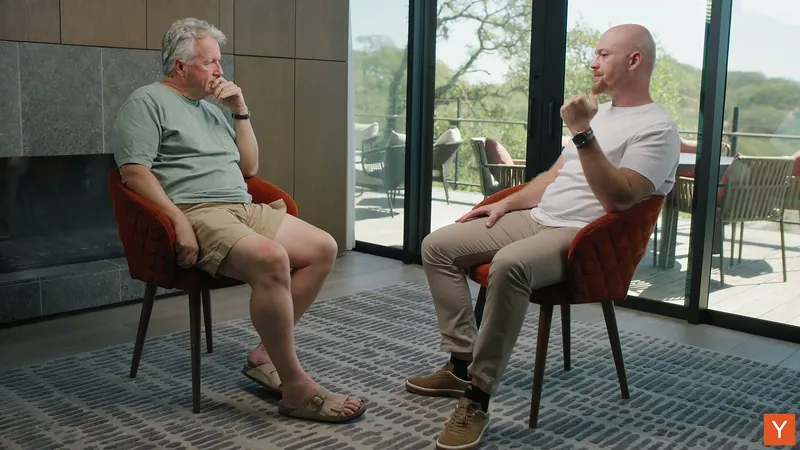
Replit co-founder and chief executive Amjad Masad says unnamed customers told him a project scoped at US$10 million cost US$250,000 on Replit. 4546 That is the seller’s claim, and it cannot be checked. 46 Treat it as a reason to test, not a savings promise.
Paul Graham and Masad agreed that this “starts with internal stuff”: the software a company uses for its own work, such as quotes, reports and approvals. 47 Graham described “some guy who's in charge of sales and wants to write some tool for his sales department”. Masad replied: “Yes.” 48
Here is our suggestion: before signing a large internal-software quote, give an ambitious person a month and an AI coding tool—software that helps write software. Ask them to rebuild the internal tool you were about to buy.
Keep the test limited. Use invented records rather than live customer or patient information. If it fails, use the failure to ask sharper questions about what the vendor is charging for.
Compare maintenance, permissions and support, not just whether the first screen works. Keep your data somewhere you can move it.
A software investment should keep paying you back, rather than merely produce an impressive demonstration.
What this means for you: Prototype the internal job before committing, but do not mistake a working demo for a dependable service.
How do you avoid being locked in to one AI provider?

Mistral co-founder and chief executive Arthur Mensch warned that if every company comes to rely on “two or three providers”, those providers will use the data their systems produce “to make better systems and to go after the business of their customers”. 4950 That is his prediction, not an established plan by any provider. Mistral sells an alternative, including downloadable model files. 51
Windsurf, a start-up selling an AI coding tool, shows a narrower access risk. On 3 June 2025, it said Anthropic had cut nearly all the capacity Anthropic supplied directly to it for Claude 3.x models, with less than five days’ notice. 52
Anthropic said it was “prioritizing capacity for sustainable partnerships”. 53 OpenAI was reportedly buying Windsurf at the time. 53 Anthropic co-founder and chief science officer Jared Kaplan said: “I think it would be odd for us to be selling Claude to OpenAI”. 54
Anthropic also said Claude 4 remained available on Windsurf through an application programming interface (API) key. 53 An API connects software to a service; the key is the password for that connection. 53 Access changed, but did not disappear entirely. 5253
Funding reports offer another reminder that plans move. On 6 November, TechCrunch, citing Bloomberg, reported that OpenAI had raised about US$11 billion so far at a US$1.25 trillion valuation. 55 That was below an earlier reported US$30 billion target. 55 CNBC had reported a reduced target of up to US$20 billion; OpenAI did not respond to its request for comment. 56
Our point is changing plans, not a verdict on any company. Prepare for any provider’s plans, prices or access to change.
What can go wrong with one provider, and the fix
| Risk | What happened | Your fix—our advice |
|---|---|---|
| Access shrinks | Windsurf reported reduced direct capacity; another route remained | Test an alternative before needing it |
| Plans change | Reports described changing OpenAI fundraising targets | Avoid depending on future promises |
| Future competition | Mensch warned of it; a prediction, not a finding | Keep control of movable business data |
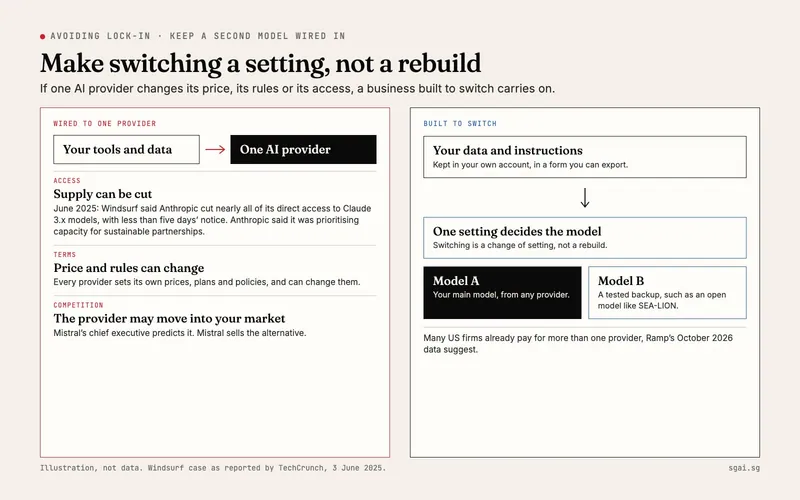
Our suggested setup is simple: keep data in your own account, test a second model and ask for switching to be a setting rather than a rebuild.
Ramp’s figures suggest many US firms on its platform already pay more than one AI provider. 5758 You need not use both equally; test the backup on the same job.
AI Singapore’s SEA-LION is an open option built for Southeast Asian languages: model files others can download and run. 59 Our advice is to include it only if someone can support the setup.
What to check: Can you export your records? Where does information go when the AI works? Can another model complete the same task? See our guide to testing a cheaper second model and checking where your data goes.
What this means for you: Keep your data and a tested alternative, without assuming any supplier is uniquely safe or risky.
What to do now
What to do, by situation
These are our suggested next steps, not official requirements.
| Your situation | Our suggestion | Evidence before spending more |
|---|---|---|
| Nobody uses AI | Check included tools; then provide an assistant and learning time | Staff actually use it |
| You already pay for subscriptions | Pick one repeated job | Time saved after checking |
| You face a large software quote | Give an ambitious person a month to prototype | Clearer scope, support and costs |
| You handle sensitive records | Test with invented information first | Approved data route and permissions |
| One provider supports daily work | Test a second service and data export | The job still works after switching |
Tax help is different from cash support. The Enterprise Innovation Scheme (EIS), administered by the Inland Revenue Authority of Singapore (IRAS), offers AI deductions for Year of Assessment (YA) 2027 and YA 2028. 60 These cover financial years ending in 2026 and 2027. 61
Tax deduction or grant?
The limits below are official Singapore-dollar amounts, not currency conversions. 62376364
| Option | What it gives | Key conditions | Best for—our view |
|---|---|---|---|
| EIS AI deduction | 400% deduction on first S$50,000 of qualifying AI spending per YA | No cash payout; qualifying costs only | Costs your accountant confirms qualify |
| EDGE pre-approved AI solutions | Chatbot: up to 50%, S$7,500; marketing content and accounting automation: up to 50%, S$2,500 each | Apply before work or payment; at least 30% Singaporean or permanent-resident ownership | A specific job with a suitable approved tool |
| MOM course-linked tools | Six months of complimentary premium AI tools | Singaporeans taking selected AI courses | Staff learning to use AI |
For EIS, exclude hardware and grant-funded spending. Split mixed bills so only qualifying AI costs enter the claim. 6568 Claim through the tax return and ask your accountant; a deduction is not a promised cash saving. 6970 Our illustration: S$2,523 a year at the typical level would mean S$10,092 of deductions, well under the S$50,000 cap. 70 What that is worth in cash depends on your profits and tax position. 70
EDGE replaced the Productivity Solutions Grant, the Enterprise Development Grant and Market Readiness Assistance, which closed on 29 September 2026. 71 For EDGE, use pre-approved vendors and solutions on the Infocomm Media Development Authority’s (IMDA) SMEs Go Digital list. Apply before work starts or any payment or deposit. 66 Check eligibility before committing, not afterwards.
Watch our reel on what firms really spend on AI on Instagram
What this means for you: Start small, prove the saving, and keep a route to another provider.
Questions Singapore business owners are asking
How much should a ten-person Singapore business spend on AI?
About S$210 a month is a useful starting reference, not a Singapore average or a software quote. That is our calculation from US$16.32 per employee among US firms on Ramp that pay for AI. We use US$1 = S$1.2884, dated 20 November 2026. First check whether your existing office subscription already includes useful AI, then buy only what your team needs.
Will AI definitely improve my business’s profits?
No guaranteed profit gain is established. A Singapore study published by the Ministry of Energy, Trade and Industry found higher revenue and employment associated with AI use. It found no statistically significant productivity or profit gain within four years, using data up to 2024. Our advice: measure the time saved on your own work, including checking and corrections, before increasing spending.
Can Singapore businesses claim tax deductions for AI subscriptions?
Qualifying AI spending can receive a 400% deduction on the first S$50,000 per Year of Assessment under the Enterprise Innovation Scheme. The AI provision covers the Years of Assessment 2027 and 2028, and it has no cash-payout option. IRAS’s definition includes subscribing to an AI system; hardware and grant-funded amounts are excluded, and only the qualifying part of a mixed bill counts. Ask your accountant to check eligibility and claim through the tax return.
Should I prototype before accepting a large business-software quote?
Our advice is to try a limited prototype—a rough working version—for an internal job before making a large commitment. Replit’s Amjad Masad and Paul Graham agreed that these projects start with internal tools. Give an ambitious employee a month, use invented data, and compare the result with the quote. Even an unsuccessful trial can help you ask sharper questions about maintenance, permissions and support.
How can I avoid being locked in to one AI provider?
Our advice: keep your data in an account you control, test another AI service on the same work, and check how to export everything. In June 2025, Windsurf reported sharply reduced direct access to Claude 3.x. Anthropic said it was prioritising capacity for sustainable partnerships, and that Claude 4 could still be used on Windsurf via an API key, the password that connects software to an AI service. The lesson is to prepare an alternative, not to assume any provider is uniquely risky.
Sources
- [1]Ramp AI Index — Ramp, data through October 2026, 2026-11-22
- [2]SGAI calculation from the Ramp AI Index and ECB rates — Ramp and ECB, 2026-11-22
- [3]Euro foreign exchange reference rates — European Central Bank, 2026-11-20
- [4]Ramp AI Index — Ramp, data through October 2026, 2026-11-22
- [5]Ramp AI Index — Ramp, data through October 2026, 2026-11-22
- [6]Ramp AI Index — Ramp, data through October 2026, 2026-11-22
- [7]SGAI calculation from the Ramp AI Index and ECB rates — Ramp and ECB, 2026-11-22
- [8]SGAI calculation from the Ramp AI Index and ECB rates — Ramp and ECB, 2026-11-22
- [9]The Brainstorm 156 — ARK Invest on YouTube, 2026-11-04
- [10]SGAI arithmetic from the Ramp AI Index — Ramp, data through October 2026, 2026-11-22
- [11]Ramp's Economist Found Cracks In The AI Thesis, The Brainstorm 156 — ARK Invest on YouTube, 2026-11-04
- [12]The Brainstorm 156 — ARK Invest on YouTube, 2026-11-04
- [13]Ramp AI Index — Ramp, data through October 2026, 2026-11-22
- [14]The Brainstorm 156 — ARK Invest on YouTube, 2026-11-04
- [15]The Brainstorm 156 — ARK Invest on YouTube, 2026-11-04
- [16]The Brainstorm 156 — ARK Invest on YouTube, 2026-11-04
- [17]The Brainstorm 156 — ARK Invest on YouTube, 2026-11-04
- [18]SGAI calculation with an assumed staff cost, using MOM pay data — MOM via data.gov.sg, 2026-11-22
- [19]Median Gross Monthly Income From Employment of Full-Time Employed Residents by Sex — MOM via data.gov.sg, 2026-03-27
- [20]Measuring Firm-Level Artificial Intelligence Use and its Effects on Firm Performance and Employment in Singapore — METI, 2026-08-11
- [21]Inaugural Release of Report on Adoption of Artificial Intelligence Among Firms — MOM, 2026-04-30
- [22]Measuring Firm-Level Artificial Intelligence Use — METI, 2026-08-11
- [23]Measuring Firm-Level Artificial Intelligence Use — METI, 2026-08-11
- [24]Measuring Firm-Level Artificial Intelligence Use — METI, 2026-08-11
- [25]Ramp AI Index — Ramp, data through October 2026, 2026-11-22
- [26]Inaugural Release of Report on Adoption of Artificial Intelligence Among Firms — MOM, 2026-04-30
- [27]Inaugural Release of Report on Adoption of Artificial Intelligence Among Firms — MOM, 2026-04-30
- [28]Inaugural Release of Report on Adoption of Artificial Intelligence Among Firms — MOM, 2026-04-30
- [29]Written Answer to PQ on Breakdown of AI-Adopting Firms by Firm Size and Outcomes — MOM, 2026-08-04
- [30]Inaugural Release of Report on Adoption of Artificial Intelligence Among Firms — MOM, 2026-04-30
- [31]A 44-minute call and a memo: How Alexandr Wang won Mark Zuckerberg's trust—and a $100 billion-plus AI bet — Fortune, Emma Witman, 2026-10-17
- [32]Zuckerberg's $100 Billion Bet — Cheeky Pint on YouTube, 2026-10-12
- [33]Cracks are emerging in the AI spending boom — TechCrunch, Rebecca Bellan, 2026-10-30
- [34]Meta Reports Third Quarter 2026 Results, Exhibit 99.1 — Meta, SEC filing, 2026-10-21
- [35]Alphabet tanks nearly 13% for worst day ever, losing $500 billion in value — CNBC, 2026-10-29
- [36]Alphabet tanks nearly 13% for worst day ever, losing $500 billion in value — CNBC, 2026-10-29
- [37]GenAI Customer Engagement Chatbot, EDGE Grant — Enterprise Singapore, 2026-11-22
- [38]Compare Flexible Pricing Plan Options, Google Workspace — Google, 2026-11-22
- [39]Google I/O 2026: Sundar Pichai gave numbers to explain rapid AI adoption — Digit, Jayesh Shinde, 2026-05-20
- [40]Why PMs are suddenly valuable again, Tulsee Doshi — Lenny's Podcast on YouTube, 2026-11-08
- [41]Why PMs are suddenly valuable again, Tulsee Doshi — Lenny's Podcast on YouTube, 2026-11-08
- [42]Why PMs are suddenly valuable again, Tulsee Doshi — Lenny's Podcast on YouTube, 2026-11-08
- [43]Why PMs are suddenly valuable again, Tulsee Doshi — Lenny's Podcast on YouTube, 2026-11-08
- [44]Why PMs are suddenly valuable again, Tulsee Doshi — Lenny's Podcast on YouTube, 2026-11-08
- [45]How To Build The Future: Paul Graham & Amjad Masad — Y Combinator on YouTube, 2026-11-07
- [46]How To Build The Future: Paul Graham & Amjad Masad — Y Combinator on YouTube, 2026-11-07
- [47]How To Build The Future — Y Combinator on YouTube, 2026-11-07
- [48]How To Build The Future — Y Combinator on YouTube, 2026-11-07
- [49]Mistral CEO: Why OpenAI & Anthropic Will Come for Your Business — 20VC with Harry Stebbings on YouTube, 2026-11-09
- [50]Mistral CEO: Why OpenAI & Anthropic Will Come for Your Business — 20VC with Harry Stebbings on YouTube, 2026-11-09
- [51]About Mistral AI — Mistral AI, 2026-11-22
- [52]Windsurf says Anthropic is limiting its direct access to Claude AI models — TechCrunch, Maxwell Zeff, 2025-06-03
- [53]Windsurf says Anthropic is limiting its direct access to Claude AI models — TechCrunch, Maxwell Zeff, 2025-06-03
- [54]Anthropic co-founder on cutting access to Windsurf: 'It would be odd for us to sell Claude to OpenAI' — TechCrunch, Maxwell Zeff, 2025-06-05
- [55]OpenAI reportedly raises an additional $11 billion at a $1.25 trillion valuation — TechCrunch, Lucas Ropek, 2026-11-06
- [56]OpenAI pares fundraising goal, now seeking up to $20 billion in latest round — CNBC, Ashley Capoot and Lora Kolodny, 2026-10-31
- [57]Ramp AI Index — Ramp, data through October 2026, 2026-11-22
- [58]Ramp AI Index — Ramp, data through October 2026, 2026-11-22
- [59]SEA-LION — AI Singapore, 2026-11-22
- [60]Enterprise Innovation Scheme (EIS) — IRAS, 2026-09-23
- [61]Explanatory Notes to Form C-S for Year of Assessment 2026 — IRAS, 2026-11-22
- [62]Enterprise Innovation Scheme (EIS) — IRAS, 2026-09-23
- [63]GenAI Marketing and Sales Content Generation, EDGE Grant — Enterprise Singapore, 2026-11-22
- [64]AI Accounting Automation, EDGE Grant — Enterprise Singapore, 2026-11-22
- [65]Enterprise Innovation Scheme (EIS) — IRAS, 2026-09-23
- [66]GenAI Customer Engagement Chatbot, EDGE Grant — Enterprise Singapore, 2026-11-22
- [67]Inaugural Release of Report on Adoption of Artificial Intelligence Among Firms — MOM, 2026-04-30
- [68]Enterprise Innovation Scheme (EIS) — IRAS, 2026-09-23
- [69]Enterprise Innovation Scheme (EIS) — IRAS, 2026-09-23
- [70]SGAI calculation from IRAS's EIS page — IRAS, 2026-09-23
- [71]EDGE Grant — Enterprise Singapore, 2026-11-22
How this was made. SGAI's desk picks the story and the Singapore angle and gathers the primary sources. An AI model drafts from those sources only. Every figure is checked against the linked source before Jay Qin reviews and publishes. Spotted an error? Email jay@sgai.sg and we will correct it here, in the open.