AI for F&B: How to Stop Throwing Money in the Bin Every Night
3,000+ F&B businesses closed in 2024. Ingredient costs from Malaysia are up 50-300%. The average hawker throws away 10-20% of prepared food daily. This article is not about ChatGPT or futuristic robots. It's about practical AI tools that solve specific F&B problems — and the government pays half.
The Reality of Running F&B in Singapore Right Now
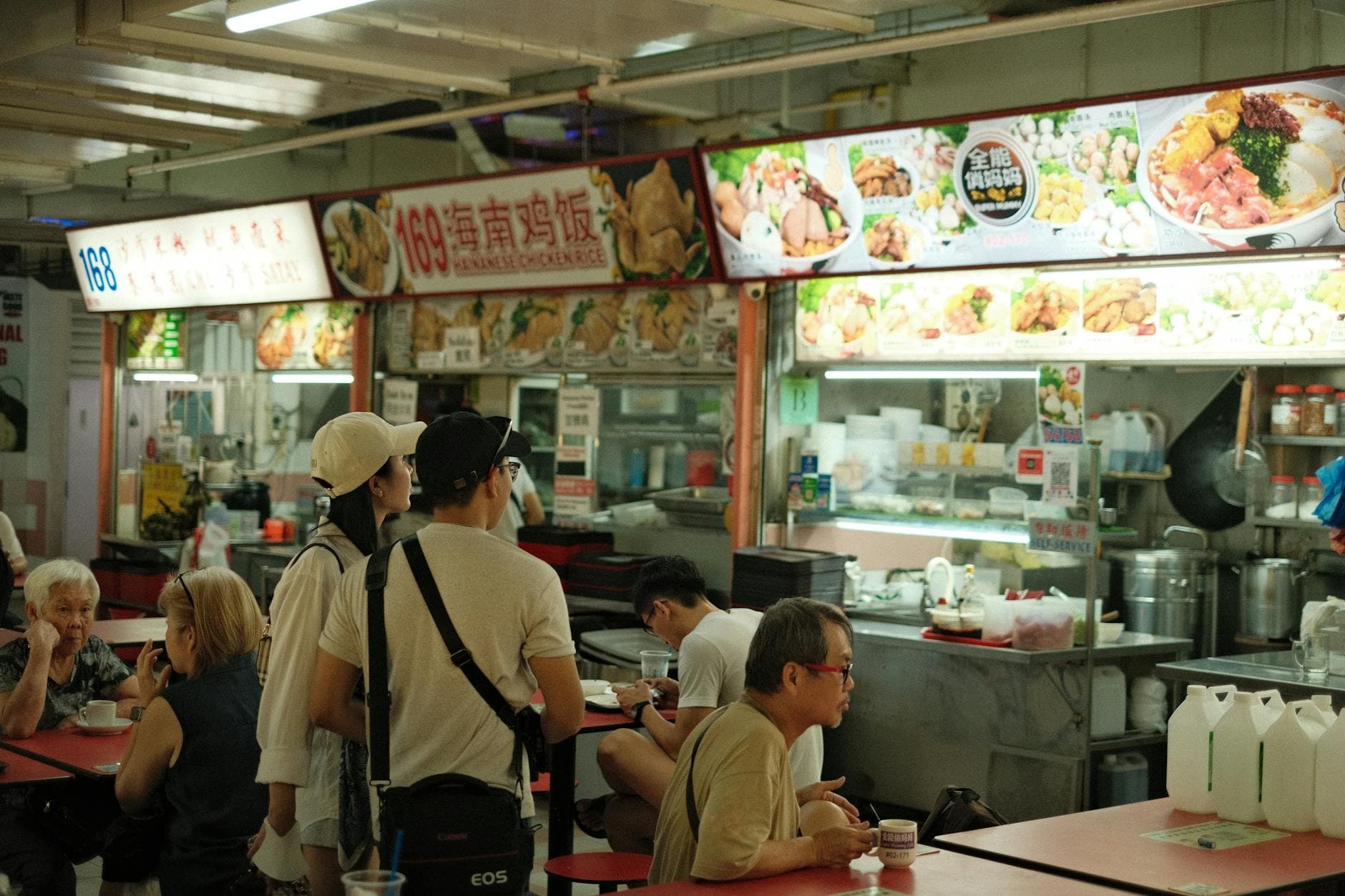
If you run a hawker stall, kopitiam, or restaurant in Singapore, you already know the math is brutal. But let's put actual numbers on it — because the scale of the problem is worse than most people realise.
F&B Closures in 2024
3,000+
a record — and still climbing
Food Waste per Stall Daily
10-20%
of prepared food goes in the bin
F&B Resignation Rate
2.2%
highest across all industries
Chicken rice ingredients from Malaysia cost 50-300% more than they did three years ago. Cooking oil, rice, chicken — everything has gone up, and it's not coming back down. Meanwhile, hiring a part-time helper costs S$1,500-2,000 per month — if you can find one at all. The F&B resignation rate of 2.2% is the highest across all industries in Singapore. People don't want to work in kitchens when they can drive Grab or work in aircon.
You're caught in a squeeze: costs going up on every side, margins getting thinner, and fewer hands to help. Most F&B owners respond by working harder themselves — 14-hour days, 7 days a week. That's not a business strategy. That's a countdown to burnout.
This article is about a different approach.
Not ChatGPT. Not robot chefs. Not some Silicon Valley fantasy. We're talking about practical AI tools that solve specific, everyday F&B problems — predicting how much to cook, ordering ingredients automatically, taking catering orders while you sleep, optimising your menu, and scheduling your staff. And the Singapore government will pay 50% of the cost through the Productivity Solutions Grant (PSG).
1. Demand Forecasting That Actually Works
Every F&B owner plays the same guessing game every morning: how much should I prep today? Too much, and you throw food away. Too little, and you turn customers away. Both cost you money.
AI demand forecasting plugs into your POS system and learns from your actual sales data. It factors in day of the week, weather, school holidays, nearby events, even payday cycles. After 2-3 months of learning your patterns, it tells you: “Tomorrow is a rainy Wednesday during school holidays — prep 140 plates, not 200.”
Real Singapore context
Your chicken rice stall near an office building? AI knows Monday lunch is 30% busier than Tuesday. It knows when school holidays mean fewer office workers. It knows rainy days mean more delivery orders but fewer walk-ins. It knows the week before Chinese New Year is dead but the week after is packed with reunion-overflow crowds. You know all this instinctively — but AI tracks it precisely, across hundreds of variables, every single day.
ROI Math (in S$)
Honest note: AI won't be perfect from day one. It learns from YOUR sales data over 2-3 months. The more data, the better the predictions. If you've been using a paper-based system with no sales records, you'll need to start tracking digitally first. But once it has the data, the accuracy compounds — it gets better every week.
2. Smart Inventory That Orders for You
Every F&B owner has a horror story. You forgot to order chicken and realised at 2am. You bought too much kangkong and it wilted by Wednesday. You ran out of cooking oil on a Saturday lunch rush. These are not rare events — they happen every week, and each one costs you money or customers or both.
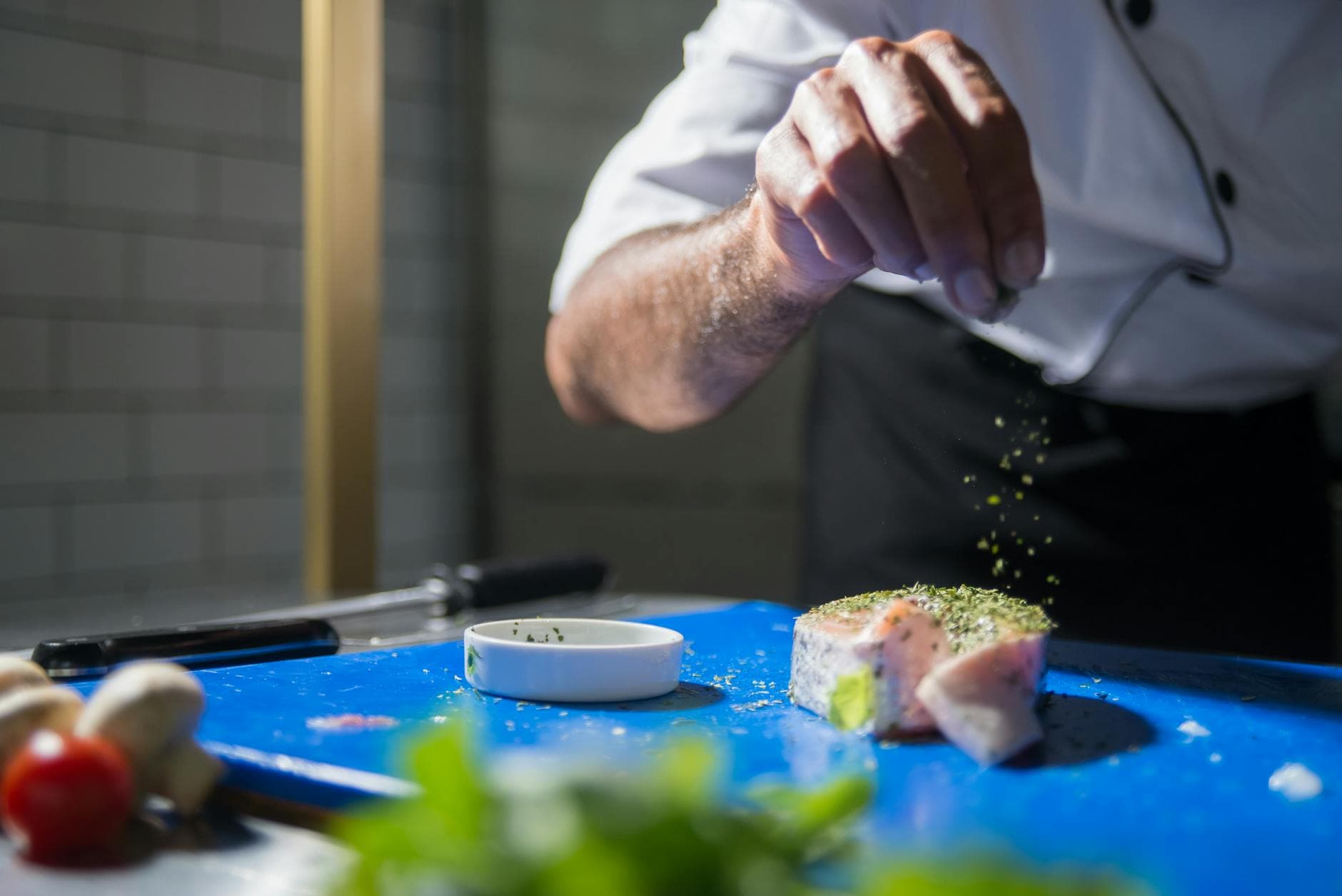
AI inventory management tracks what you use in real time, predicts when supplies will run low based on your consumption patterns and upcoming demand forecasts, and auto-generates orders to your suppliers. No spreadsheets. No mental math at midnight. No “I think we have enough eggs for tomorrow.”
Example: Nasi Lemak Stall
Your nasi lemak stall uses 15kg of rice on weekdays and 25kg on weekends. You go through 20 litres of cooking oil per week, but 30 litres during festive periods. AI learns these patterns and auto-orders the right amount from your supplier every Thursday — adjusted for next week's predicted demand. Your supplier gets a consistent, predictable order. You never run out. You never over-order. Everyone wins.
The best part: smart inventory connects to your demand forecasting. If AI predicts a quieter week ahead (school holidays, for example), it automatically reduces your ingredient order. If it predicts a busy week (payday Friday + good weather), it orders more. The two systems talk to each other so you don't have to.
Grant: PSG-approved inventory management systems are available — government pays 50%.
3. WhatsApp Ordering for Catering
If you do catering — office lunches, event buffets, party trays — you know the pain. Customers call at all hours. They text in English, Mandarin, Malay. They change their order three times. They say “50 people” but mean “15 people.” You spend more time on the phone than in the kitchen.
An AI chatbot on WhatsApp handles catering enquiries 24/7 in English, Mandarin, and Malay. It presents your menu options, confirms quantities, calculates the total, sends an invoice, collects the deposit, and sends a reminder 2 days before the event. All while you sleep.
How It Works in Practice
9:00 PM — Customer texts
“我要订50人份的自助餐,下个星期六”
(I want to order a buffet for 50 people, next Saturday)
9:01 PM — AI responds in Mandarin
Confirms: 50 pax, next Saturday. Presents 3 buffet package options with prices. Asks about dietary requirements and delivery address.
9:05 PM — Order confirmed
Customer selects Package B (S$18/pax). AI calculates S$900 total, sends invoice, requests 50% deposit of S$450. Payment link included.
You wake up to
A confirmed order, deposit paid, all details logged. No phone calls. No miscommunication. No “I thought you said 50 people not 15.”
Honest note: For complex custom menus — “I want half the buffet to be halal, a separate vegetarian section, and can you do a live station?” — you'll still want to call the customer personally. But for standard packages, which make up about 80% of catering enquiries, AI handles it end to end.
4. Dynamic Menu Optimisation
Most F&B owners set their menu and leave it. Maybe you tweak prices once a year. Maybe you add a new dish when you feel like it. But you're almost certainly leaving money on the table — because you don't have time to analyse which dishes sell best at what times, which combos would increase average order value, and which items are quietly dragging your profits down.
AI menu analytics crunches your POS data and tells you exactly what's working and what isn't — with numbers, not gut feel.
What AI Sees That You Might Miss
- ✓Your nasi lemak sells 3x on Fridays vs other days — AI suggests a “Friday Nasi Lemak Special” bundle with teh tarik at a slight premium. Result: higher average order value on your busiest day.
- ✗Your mee goreng hasn't sold more than 5 plates on any Tuesday in 3 months. AI flags it: “Consider replacing Tuesday mee goreng with a dish that has higher Tuesday demand, or drop it to reduce prep waste.”
- ✓Customers who order chicken rice also order barley water 60% of the time. AI suggests a combo deal: S$0.50 off barley water with chicken rice. You sell more drinks at a small margin hit but much higher volume.
- ✓Your most profitable dish per plate (accounting for ingredient cost, prep time, and selling price) is your curry chicken — but it's buried third on the menu. AI recommends promoting it to position one.
Studies show that data-driven menu optimisation can increase average order value by 10-15%. For a stall doing S$500/day in revenue, that's an extra S$50-75 per day — or S$18,250-27,375 per year. From the same kitchen, the same staff, the same hours. Just smarter decisions about what to sell, when, and how.
5. Staff Scheduling That Makes Sense
With the F&B resignation rate at 2.2% — the highest across all industries — every staff member you have is precious. You can't afford to burn them out with bad scheduling, and you can't afford to overstaff on quiet days.
AI staff scheduling predicts busy and quiet periods using the same data as demand forecasting (weather, holidays, events, historical patterns) and auto-generates staff rosters that match demand to manpower. No more overstaffing on Tuesday, understaffing on Saturday.
Examples
Payday Friday + nearby office building + good weather = you need 3 people, not 2. AI schedules an extra part-timer for Friday lunch and dinner.
School holiday Monday + rain = you need 1 person, not 2. AI gives your staff an extra day off — they're happier, you save on wages.
Long weekend eve = dinner rush starts 30 minutes earlier than usual. AI shifts the roster start time forward so you're not caught understaffed at 5:30pm when the crowd hits.
Better scheduling solves two problems at once. First, it saves money on wages by matching staff to actual demand. Second — and arguably more important in Singapore's tight labour market — it keeps your staff happier. Nobody likes being bored on a dead Tuesday shift or overwhelmed on a Saturday with too few hands. Fair, predictable scheduling is one of the top reasons F&B workers stay or leave.
How to Pay for All This: Government Grants
You don't need to pay full price for any of these AI tools. The Singapore government actively wants F&B businesses to adopt technology — because the labour shortage is a national problem, not just yours.
Read our detailed comparisons: PSG vs EDG — Which Grant Is Right for You? and The Complete Guide to Singapore AI Grants 2026.
Thinking of opening your own F&B spot? Read our deep-dive: Opening a Café in Singapore 2026 — cost, licences, and why so many fail.
Not Sure Which AI Tools Are Right for Your F&B Business?
Take our free 2-minute assessment. We'll tell you which tools fit your operation — hawker stall, kopitiam, restaurant, or catering — and how much the government will co-fund.
Free. No sign-up required. Takes 2 minutes.
Take the Free AssessmentInformation as of March 2026. Grant rates and conditions may change. Always verify current eligibility and rates on GoBusiness before applying.