4 Industries the Government Wants to Transform with AI — and How to Get Funded
The government didn't pick these 4 industries randomly. Manufacturing is short 15% of its workforce. Polyclinic patients wait up to 3 hours. The port needs AI to stay ahead of Malaysia's mega-port challenge. And finance — DBS and Grab are already there. Here's what it means for businesses in each sector.
Budget 2026 named 4 National AI Missions: advanced manufacturing, connectivity & logistics, finance, and healthcare. Read our Budget 2026 AI summary for the full context and PM Wong's key quotes.
But why these 4? Not because they sound impressive in a speech. Because each one faces a specific, measurable crisis that AI can address. Let's go sector by sector.
Advanced Manufacturing
The problem in numbers:
15%
workforce shortfall
10-20%
salary increases for hard-to-fill roles
~20%
of GDP comes from manufacturing
Manufacturing contributes a fifth of Singapore's GDP, but the sector is bleeding workers. Experienced supervisors are retiring and young locals aren't replacing them. Foreign worker quotas tightened by 4.2% in 2024 — right when the pipeline includes data centres, hospitals, and Changi Terminal 5. The maths is brutal: more projects, fewer people.
What AI Actually Solves
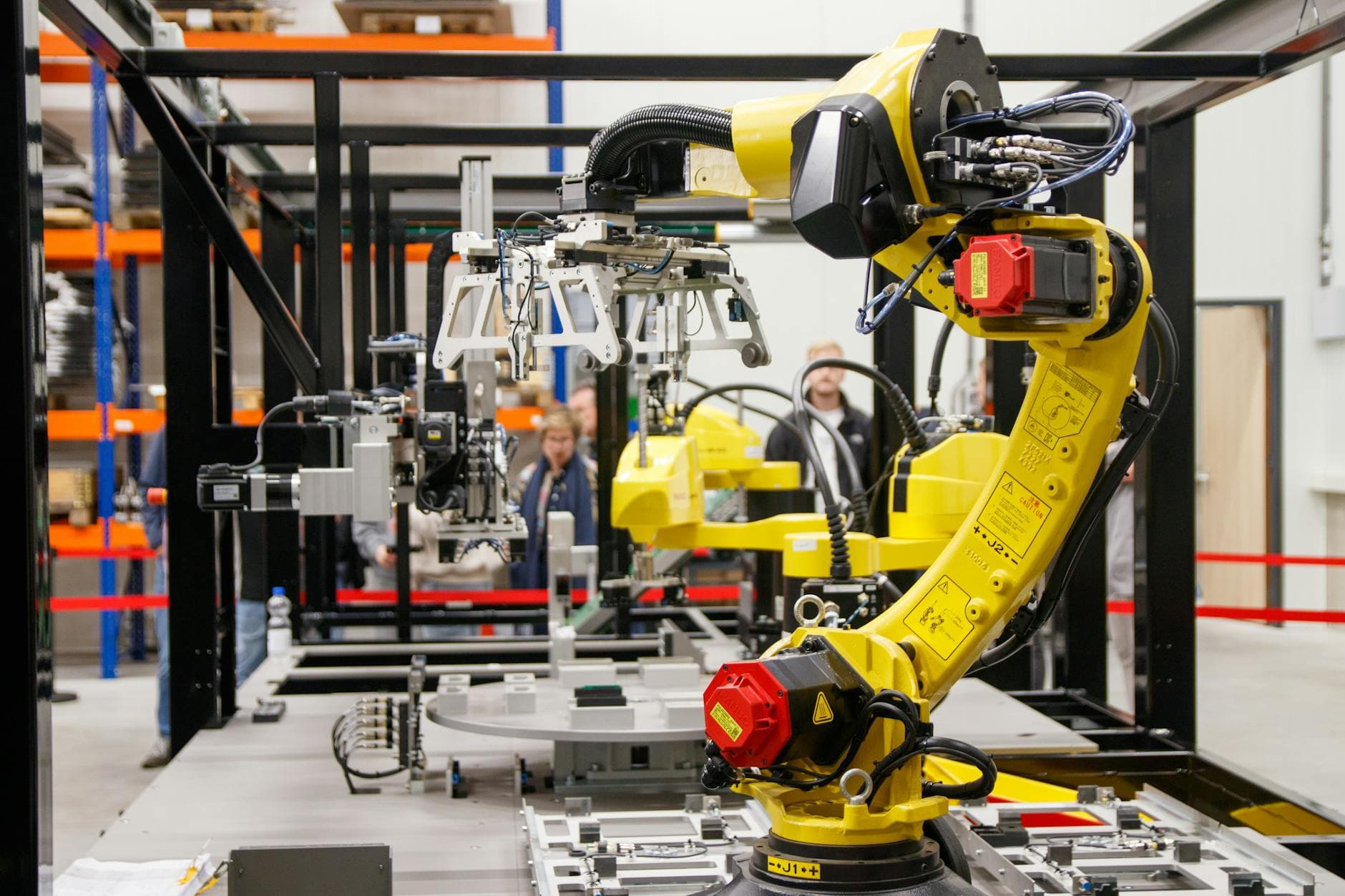
AI visual inspection: 97-99% accuracy vs 85% human
Your Jurong factory makes precision parts. A human inspector catches 85 out of 100 defects — and gets worse after lunch. An AI camera system catches 97-99 and processes 1,000+ items per minute. Firms switching to AI inspection report up to 50% reduction in waste and 90% improvement in defect detection. This is not future technology — it is deployed in factories worldwide today.
Predictive maintenance: fix before it breaks
Your CNC machine costs S$500K. When it breaks down unexpectedly, you lose a day of production. AI sensors monitor vibration, temperature, and usage patterns and tell you: “This bearing will fail in 12 days. Schedule maintenance now.” You fix it on Saturday instead of losing Monday.
Example: Precision Parts Factory (40 Staff, Jurong)
AI vision at each production stage catches defects 15 steps before the old final-stage human check. Predictive maintenance cuts unplanned downtime by 30-40%. Total cost savings pay for the system within 12-18 months — and the government subsidises 50-70% of the upfront cost through ECI or EDG.
Grants: ECI (consulting + cloud) | EDG (custom AI) | PSG (off-the-shelf monitoring)
Connectivity & Logistics
The stakes:
41M
TEUs handled in 2025
65M
TEU target when Tuas Port completes
200+
AGVs running 24/7 at Tuas already
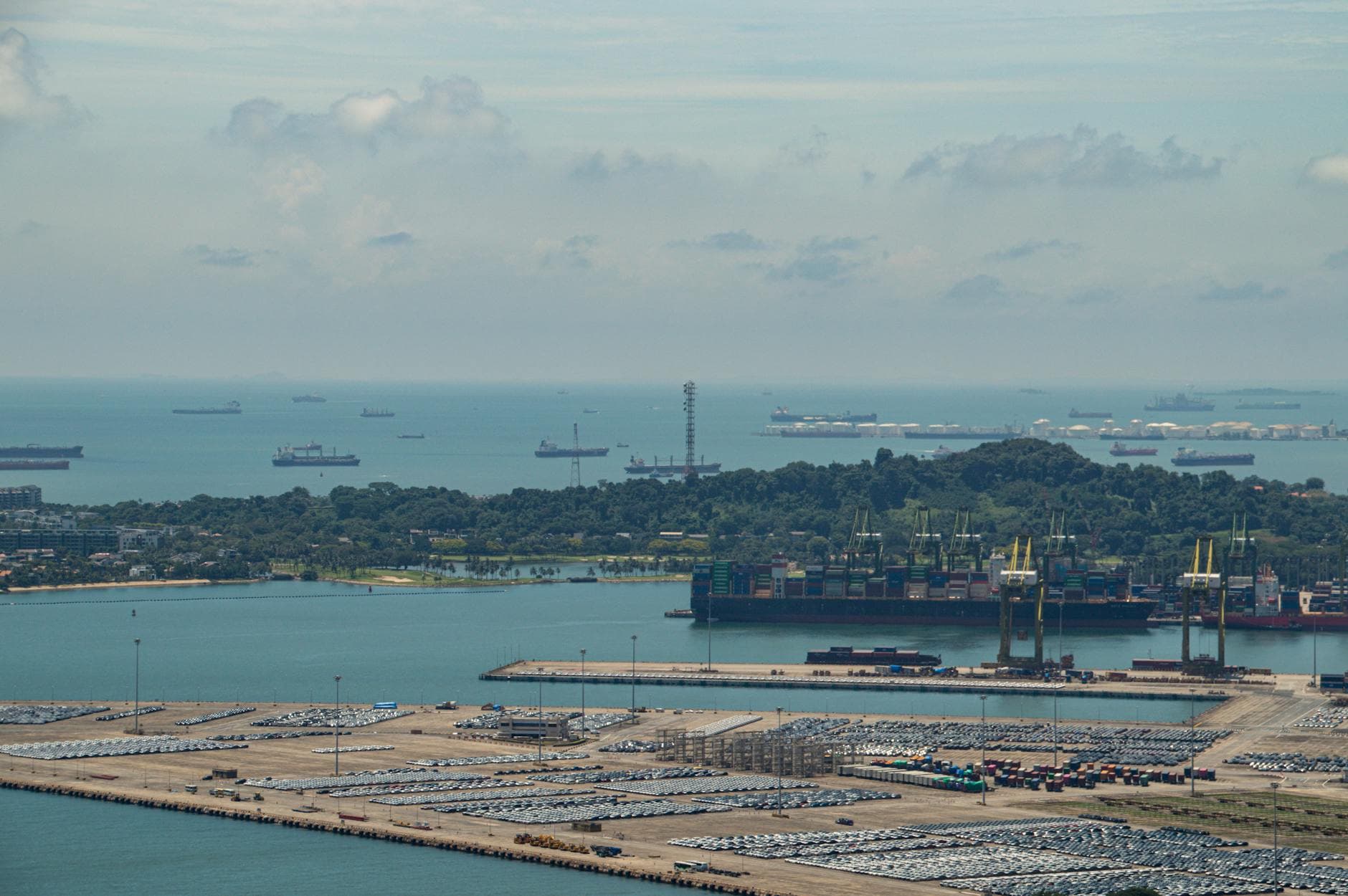
Singapore's port is the world's leading container port — named best global seaport for the 4th time and best in Asia for the 37th consecutive year. But Malaysia's Carey Island mega-port is coming. Thailand and Vietnam are expanding. Tuas Port, when fully completed by 2040, will be the world's largest fully automated port. The S$17 billion investment already runs 200+ AI-powered automated guided vehicles 24/7.
This AI push isn't just about the port. Every local delivery company, freight forwarder, and warehouse operator competes on efficiency. If the national port runs on AI, can your logistics business afford not to?
What AI Actually Solves
Route optimisation: 15-20% more deliveries per driver
Your 25 drivers do island-wide delivery. They plan routes by experience and basic GPS. AI recalculates sequences in real time — accounting for ERP gantries, school zones at 2pm, and that CTE jam that starts at 5:30pm. Proven result: each driver completes 15-20% more stops per day. At S$3,500/month per driver, that's like hiring 4-5 extra drivers for free.
Demand forecasting: know 11.11 and CNY surges before they hit
AI analyses your order history combined with calendar events (11.11, Chinese New Year, Hari Raya), weather, and macro trends to predict next week's volume. You schedule drivers and warehouse staff accordingly, instead of scrambling when orders spike 3x.
Example: Last-Mile Delivery (25 Drivers, Island-Wide)
AI route optimisation saves 45 minutes per driver per day. Over 25 drivers, that's 18+ extra hours daily — equivalent to 2.5 additional full-time drivers without hiring anyone. Demand forecasting cuts overtime costs by 20-30% during peak periods.
Grants: PSG (route software) | EDG (custom fleet AI) | ECI (heavy data processing)
Finance
“A few leading Singapore companies like DBS and Grab are already moving decisively on AI transformation.”
— PM Lawrence Wong, Budget 2026 Statement
PM Wong named DBS and Grab for a reason. DBS's AI assistant handles 58 million customer queries per month with a 98% resolution rate — meaning 98% of customers get their answer without talking to a human. That frees thousands of staff for complex advisory work. This isn't experimental. It's been running for years.
But AI in finance isn't just for banks. Insurance companies, accounting firms, money changers, and fintech startups all have processes that AI transforms.
What AI Actually Solves
Document processing: invoices, claims, contracts
Your staff spend hours reading invoices, extracting numbers, cross-checking claims. AI reads a document in seconds, extracts all relevant data, and flags inconsistencies. An insurance brokerage processing 500 claims/month can cut processing time by 60-70%.
Fraud detection: patterns humans miss
AI analyses transaction patterns across thousands of data points simultaneously. A human reviewing accounts sees one at a time. AI sees the network — and spots the insurance claim that's identical to one filed in another name 6 months ago.
Customer service: 24/7 in 4 languages
Your clients speak English, Mandarin, Malay, and Tamil. AI chatbots now handle all four natively. A customer texts in Mandarin at 11pm about their policy status — the AI responds in Mandarin within seconds. No night-shift staff needed.
Example: Insurance Brokerage (20 Staff, CBD)
AI document processing handles 80% of routine claims intake automatically. Fraud detection flags suspicious patterns that manual review would miss. Multilingual chatbot handles after-hours enquiries. Staff shift from data entry to client advisory — higher value work, better job satisfaction, no additional headcount.
Grants: EDG (custom claims AI) | PSG (document processing tools) | EIS (tax deduction on AI spend)

Healthcare
The crisis in numbers:
3,000-4,000
unfilled nursing positions
1-3 hrs
polyclinic waiting time
15,000
more healthcare workers needed by 2030
Singapore becomes a super-aged society in 2026. Over 20% of the population is 65 or older. The number of Singaporeans aged 80 and above jumped 60% in the past decade. General ward bed waits can hit 40 hours during peak demand. Polyclinic walk-in patients wait 1 to 3 hours for a doctor.
Meanwhile, nursing turnover runs at 18-22%, and vacancy rates are 12% for registered nurses and 15% for allied health professionals. The people who should be caring for patients are often buried in paperwork, scheduling, and administrative tasks that AI can handle.
What AI Actually Solves
Scheduling that actually works
Your 5 GP clinics have 30 staff managing appointments. Patients no-show 15-20% of the time. AI scheduling predicts who will no-show, overbooking accordingly, handles bookings via WhatsApp 24/7, and sends automated reminders. Clinics see more patients with fewer empty slots. Your receptionists go from phone operators to patient care assistants.
AI triage: the right patients see the right doctor faster
Not every polyclinic patient needs 15 minutes with a doctor. AI triage analyses symptoms and history to route straightforward cases (medication refills, routine follow-ups) to faster tracks, while flagging complex cases for senior doctors. The result: shorter waits for everyone, better use of doctor time.
AI diagnostics: a second opinion that never sleeps
HSA launched an AI-SaMD (Software as a Medical Device) sandbox in 2025, and AIGP Health became the first AI healthcare platform to receive HSA Class A approval. AI analyses X-rays and scans to flag potential issues — not replacing doctors, but catching things a tired pair of eyes might miss at 3am.
Example: GP Clinic Group (5 Clinics, 30 Staff)
AI WhatsApp booking system handles 70% of appointment scheduling automatically — including Mandarin and Malay-speaking patients. No-show prediction reduces empty slots by 25%. AI-assisted triage routes medication refill patients to a faster track. Total: 20-30% more patients seen per day, same staff count, less burnout.
Grants: PSG (scheduling software) | EDG (custom multi-clinic AI) | EIS (tax deduction)
What If My Industry Isn't Listed?
The 4 missions get extra focus. Every other industry still gets funded.
PSG, EDG, ECI, and EIS cover all industries. The 4 missions mean dedicated government attention and sector-specific AI initiatives. But a salon, hawker stall, tuition centre, or cleaning company can apply for the same grants.
“We will expand the PSG to support a wider range of digital and AI-enabled solutions, so that every firm, regardless of size, can access tools that help them work smarter and compete more effectively.”
— PM Lawrence Wong, Budget 2026 Statement
Here are use cases for everyday Singapore businesses outside the 4 missions:
Hawker / F&B
AI demand forecasting reduces food waste by 20-30%. When chicken rice ingredients from Malaysia cost 50-300% more than 3 years ago, wasting less food directly hits your bottom line. PSG pays 50%.
Beauty / Wellness
AI booking system handles WhatsApp appointments in English, Mandarin, and Malay. No more missed calls when your therapist is with a client. Predictive scheduling fills empty slots by messaging regulars who usually book Tuesdays. PSG pays 50%.
Tuition / Education
Singapore families spend S$1.8 billion on private tuition annually. AI tutoring assistants supplement your teachers — providing personalised practice and instant feedback between classes. Your teachers focus on teaching, not marking. PSG or EDG.
Law / Accounting / Professional Services
AI document review, contract analysis, and automated report generation. Your professionals focus on advice, not paperwork. A 5-person accounting firm can handle the workload of 8 during tax season. PSG or EDG.
Quick Guide: Which Grant Fits Your Business
“I want to buy ready-made AI software”
Pick an approved tool from the list. Government pays 50%, up to S$30K/year. Simplest process. Best for: any business wanting to start with AI today.
“I need something custom built”
Hire an AI company to build a solution specific to your business. Government pays up to 70%, max S$700K. Best for: mid-sized companies with specific operational problems.
“I need AI consulting and cloud computing power”
Expert AI consultant (government pays 70% of fees) plus up to S$250K in cloud credits per provider. Requires 10+ staff and tech capacity.
“I'm already paying for AI — I want tax savings”
400% tax deduction on qualifying AI expenditures, capped at S$50K/YA for YA2027-2028. Stacks on top of the other grants.
For detailed comparisons, read our PSG vs EDG comparison and ECI explainer.
See Which Grants Fit Your Industry
Tell us your industry and business size. We'll show you which grants apply, how much co-funding you can get, and which programmes to apply for first.
Takes 2 minutes. Free. No sign-up required.
Open Grant CalculatorOfficial References
PM quotes are from the official Budget 2026 transcript. Industry statistics from MOM, SingStat, PSA, MOH, and HSA. Verify everything: