Singapore AI Grants 2026: How the Government Co-Funds Your Business's AI Upgrade
You invest in AI for your business. The government covers a big chunk of the bill. You pay first, claim back later. Here is every grant explained in plain English.
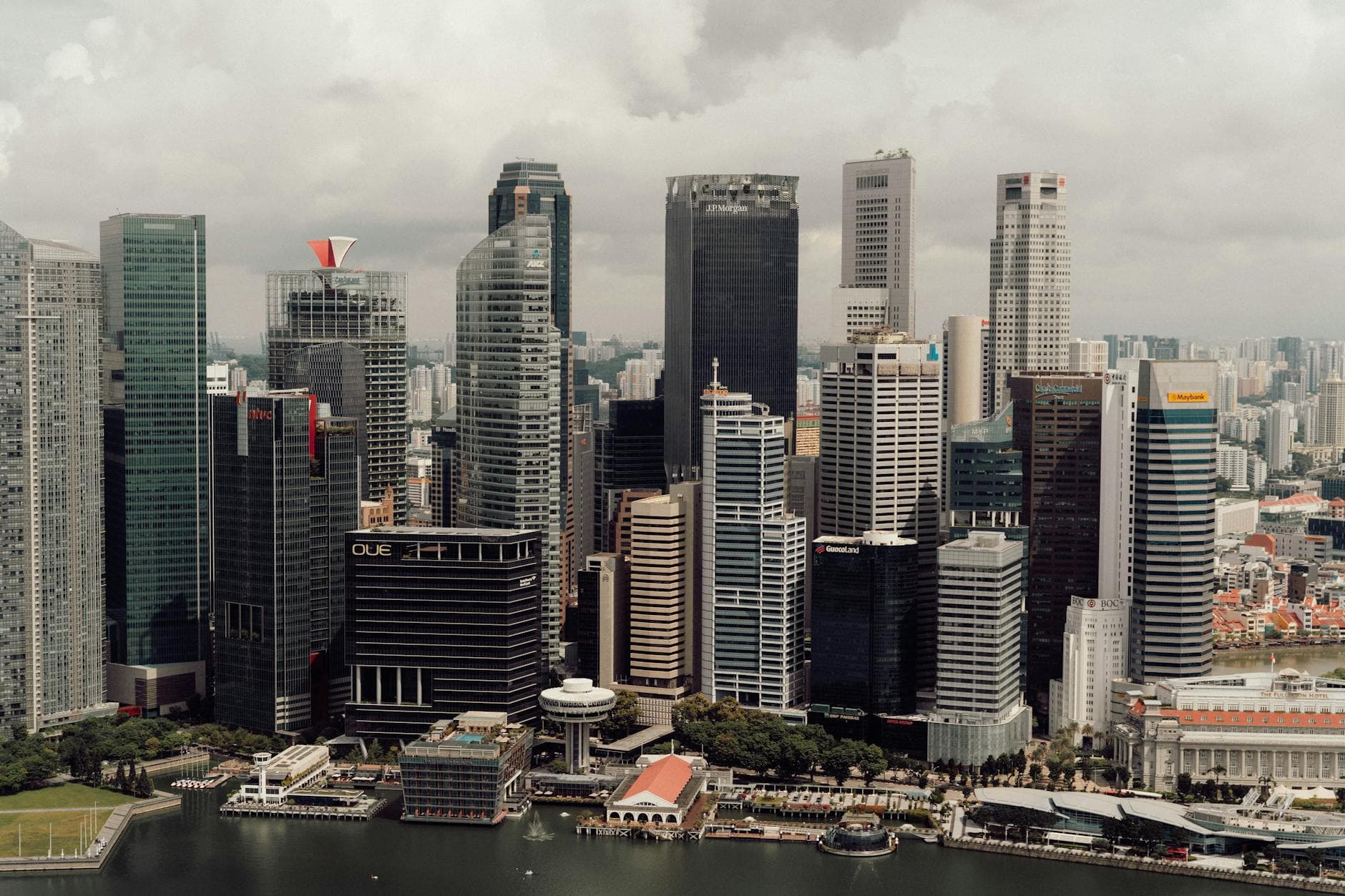
The Singapore government will subsidise 50% to 70% of your AI investment. You put in the money, they reimburse a big chunk of it.
You don't need to know what AI is. You don't need a tech team. You just need a Singapore-registered business and a willingness to let smart technology help you make more money, waste less, or serve customers better.
What the Prime Minister Said About AI in Budget 2026
“In a changed world, a decisive factor for success will be how we harness new technologies — foremost amongst them, Artificial Intelligence.”
— PM Lawrence Wong, Budget 2026 Statement, 12 February 2026
“Harnessed well, AI will be a strategic advantage for Singapore. It can help us overcome our structural constraints — our limited natural resources, rapidly ageing population and tight labour market.”
— PM Lawrence Wong, Budget 2026 Statement, 12 February 2026
“Our advantage does not lie in building the largest frontier models. It lies in deploying AI effectively, responsibly, and at speed.”
— PM Lawrence Wong, Budget 2026 Statement, 12 February 2026
How the Money Actually Flows (Read This First)
Here's the thing most people don't tell you: these grants don't hand you a cheque upfront. You invest first, the government reimburses later.
Think of it like your company medical benefits — you see the doctor, pay the bill, then claim back from your company. Same idea. The government wants to see that you're serious about using AI before they share the cost.
The typical flow is: Apply → Get approved → Pay your vendor → Use the tool → Submit claim with receipts → Government reimburses you. Depending on the grant, the reimbursement takes a few weeks to a few months after you submit your claim.
The Big Picture: Why Is the Government Doing This?
In Budget 2026, the government set aside S$37 billion for research and innovation. That's billion with a B. And AI is the number one priority.
“We will expand the PSG to support a wider range of digital and AI-enabled solutions, so that every firm, regardless of size, can access tools that help them work smarter and compete more effectively.”
— PM Lawrence Wong, Budget 2026 Statement, 12 February 2026
The government is actively pushing enterprise AI adoption through multiple programmes — from the new Champions of AI programme for ambitious firms, to expanded PSG coverage for SMEs, to four national AI Missions in advanced manufacturing, connectivity, finance, and healthcare. That means there is strong political will to co-fund companies that are willing to invest in AI. The budget is fresh, the agencies have targets to hit, and the application windows are wide open.
Right now is a good time to apply because the budget was just announced and the agencies are actively looking to approve more applications. The earlier you apply, the better your chances while funding is plentiful.
Innovation Budget
The biggest innovation budget in Singapore's history, with AI as the top priority.
National AI Missions
Targeting advanced manufacturing, connectivity, finance, and healthcare — with a National AI Council chaired by PM Wong.
Co-Funding Rate
For most grants, the government reimburses 50% to 70% of your AI investment after you make it.
What Does This Mean For You?
If you own a Singapore business, the government will subsidise 50% to 70% of the cost of AI tools and services. You pay the vendor, use the tool, then claim reimbursement. So if an AI system costs S$100,000, you might only end up paying S$30,000 to S$50,000 out of pocket after the government reimburses you.
What kind of AI are we talking about? Everyday things that help real businesses:
- A hawker stall using AI to predict daily demand for each dish so you waste less food and never run out of your bestsellers
- A neighbourhood clinic using AI for appointment scheduling and automatic patient reminders so fewer people no-show
- A tuition centre using AI to match students with the right tutors and track learning progress automatically
- A hair salon using an AI booking system that suggests time slots based on demand patterns so your stylists stay busy
- A mover company using AI route planning to figure out the most efficient sequence of daily jobs and save on petrol
- A real estate agent using AI for property valuation and automatically matching buyers with listings they will love
You just need to know which grant to apply for. That's what this guide is all about.
The Grants: Here's the Full Menu
Think of these grants like a buffet. Each one serves a different purpose. Some reimburse you for buying ready-made AI tools. Others co-fund custom-built solutions. Some send engineers to help you. Here's every option, explained simply.
| Grant | How Much | Co-Funding | Best For |
|---|---|---|---|
| PSG | S$30,000/year | 50% reimbursement | Buying ready-made AI software |
| EDG | Varies (typical S$200K-S$700K) | Up to 70% for SMEs, reimbursement | Custom AI solutions |
| ECI | S$250K per provider | Consulting subsidy + cloud credits | AI consulting and cloud compute |
| AISG 100E | ~S$150K in engineering resources | Engineers deployed (not cash) | Getting AI engineers on your project |
| GenAI Sandbox 2.0 | 50% subsidy on 3-month trial | 50% of trial cost | Trying GenAI before committing |
| Startup SG Tech | POC S$400K / POV S$800K | Milestone-based + equity rights | Tech startups only |
| EIS | 400% tax deduction | Tax-based (not cash) | Tax savings on AI spending |
Let's Break Each One Down
PSG (Productivity Solutions Grant)
Open NowAnnual Cap
S$30,000/year
Government Co-Funds
50%
This is the simplest grant. The government has a list of pre-approved AI products on the GoBusiness portal — things like smart accounting systems, chatbots, inventory trackers, and HR tools. You pick one from the list, you pay the vendor 100% upfront, use the tool for at least 30 days, then submit your claim. The government reimburses you 50%.
The annual cap is S$30,000 per year. That means the government will reimburse up to S$30,000 each year for pre-approved solutions.
Example: You run a neighbourhood bakery and want AI to predict how many loaves to bake each day so you waste less. You find an approved inventory AI on the GoBusiness list. It costs S$8,000/year. You pay the vendor S$8,000 upfront. After using it for a month, you submit your claim. A few weeks later, the government reimburses you S$4,000. Net cost to you: S$4,000.
Official application pageEDG (Enterprise Development Grant)
Open NowTypical Project Size
S$200K – S$700K
Government Co-Funds
Up to 70% for SMEs
Got a specific business problem that no off-the-shelf product can solve? EDG co-funds custom AI solutions built specifically for your business. Here is how it works: you submit a proposal. If approved, you execute the project at your own cost first. After the project is done, you submit claims with invoices and receipts. The government reimburses up to 50% (or up to 70% for qualifying SMEs).
Be aware: it takes months from project completion to actual payout. Larger claims require an audit. This is not quick money — it is a serious co-investment by the government in your business's future.
Example: You run a car workshop chain with 8 outlets. You want AI to predict which spare parts to stock at each outlet based on the cars in your neighbourhood. No off-the-shelf tool does this. An AI company quotes S$200,000. You pay them throughout the project. After it is done and audited, the government reimburses you up to S$140,000 (70%). Your net cost: S$60,000 for a system that saves you S$150,000/year in excess stock.
Official application pageECI (Enterprise Compute Initiative)
Open NowPer Cloud Provider
S$250,000
Structure
Consulting + Credits
ECI is a hybrid model with two parts:
- AI consulting subsidy — The government pays 70% of AI consulting costs directly to the consultant. You pay the remaining 30% to the consultant.
- Cloud platform credits — The cloud provider (Google, Microsoft, or AWS) gives you platform-specific credits to use their AI services. These credits are not cash — they are like a prepaid card for that specific cloud platform. Use them or lose them within 12 months.
Important: This programme requires 10 or more employees and some prior experience with technology. It is not designed for complete beginners.
You can apply with multiple cloud providers separately, up to S$250,000 per provider. Read our full ECI guide for details.
Example: You run a mid-sized logistics company (50 staff). You already use some basic automation. ECI assigns an AI consultant — the government pays 70% of their fee directly. Plus, you get cloud credits from Google/Microsoft/AWS to run your AI models. The credits are like a prepaid card for cloud services — use them or lose them within 12 months.
Official application pageAISG 100E (AI Singapore)
Open NowValue of Support
~S$150,000 in engineering
What You Get
Skilled AI engineers
This one is unique. You don't receive money — you receive skilled manpower. AISG deploys their own AI engineers to work on your project, worth up to S$150,000 in engineering resources.
Your company must match with cash, manpower, and/or data. That means you provide the business knowledge, assign staff to work alongside their engineers, share your production data, and cover some operational costs.
Example: You run a food manufacturing company. You want AI to detect defective products on your packaging line. AISG sends 2 of their AI engineers to work with your team for 6 months. They build and train the AI model. Your contribution: provide the production data, assign 1-2 staff to work with them, and cover some operational costs. You get S$150K worth of engineering talent without paying the full rate.
Official application pageGenAI Sandbox 2.0
NewSubsidy Rate
50%
Trial Period
3 months
This is a 3-month trial programme for businesses that want to test pre-approved generative AI solutions (ChatGPT-style tools) before committing serious money. The government covers 50% of the trial cost.
Think of it as a test drive. You try the AI tool for 3 months at half price. If it works for your business, you can then commit to a full deployment (potentially using EDG or other grants to co-fund the bigger rollout).
Example: You run an insurance agency and want to try AI that reads and summarises policy documents. Pick a pre-approved GenAI tool, trial it for 3 months, government covers 50% of the trial cost. Low risk way to see if AI actually helps before committing big money.
Official application pageStartup SG Tech
Startups OnlyPOC Track
Up to S$400,000
POV Track
Up to S$800,000
This is for startups only — not general SMEs. There are two tracks: Proof of Concept (POC, up to S$400K) and Proof of Value (POV, up to S$800K). The money is disbursed in milestones — hit a milestone, get the next tranche of funding.
The catch: Enterprise Singapore gets equity subscription rights — they can choose to take shares in your company later. It is more like having an investor than receiving a gift. Make sure you understand the equity terms before you apply.
Example: You are building a startup that uses AI to help elderly Singaporeans manage their medications. You need S$300K to build and test the prototype. Startup SG Tech funds it in stages — hit your first milestone, get the first tranche, and so on. But note: the government gets the right to buy shares in your company later. It is like having an investor, not a gift.
Official application pageEIS (Enterprise Innovation Scheme)
Tax SavingsBenefit
400% Tax Deduction
Type
Tax-based (not cash)
This is not a cash grant — it is a tax benefit. When you spend money on qualifying AI-related activities (like buying AI services, R&D, or training), you get a 400% tax deduction on that spending. That means the tax savings are real, but you need to be profitable to benefit fully.
If your business is not profitable yet, you can convert the benefit to a S$20,000 cash payout per qualifying activity instead. Not per dollar spent — per qualifying activity.
The best part? You can use this on top of the other grants. Your out-of-pocket costs from PSG, EDG, or other grants can qualify for EIS tax deductions.
Example: Your accounting firm spent S$50,000 on AI tools this year. With EIS, you get a S$200,000 tax deduction (400% of S$50K). At the 17% corporate tax rate, that saves you about S$34,000 in taxes. Not cash in hand, but real savings. If your business is not profitable yet, you can convert to a S$20K cash payout instead.
Official application page
Compatibility: Programmes That Cover Different Costs
Singapore's programmes are designed to cover different cost categories of a single AI project. Where each programme co-funds a distinct cost (software, custom development, cloud compute, tax), there's no overlap and the programmes are compatible. The example below shows how a real project can draw on more than one — strictly for the costs each programme is designed for.
Worked example: 10-restaurant chain
A chain of 10 restaurants wants to apply AI across the operation. Here's how the costs could realistically map to compatible programmes — each one covering its own category, none of them double-covering the same cost:
PSG — AI-powered POS and inventory system
Buy an approved POS/inventory AI system for S$15,000. You pay upfront, get S$7,500 back (50% reimbursement). Net cost: S$7,500. (Capped at S$30K/year.)
EDG — Custom AI for demand forecasting
Build a custom tool that predicts daily demand, reduces food waste, and optimises staffing. S$300,000 project. You pay throughout, get up to S$210,000 back (70% for SMEs) after completion and audit. Net cost: S$90,000.
ECI — Cloud credits for running the AI
S$100,000 worth of cloud credits from a provider. You pay 30% (S$30,000) for the consulting component. The credits themselves are provided by the cloud platform. Net cost: S$30,000.
EIS — Tax deductions on your out-of-pocket costs
Your total out-of-pocket (S$7,500 + S$90,000 + S$30,000 = S$127,500) gets a 400% tax deduction = S$510,000 deduction. At 17% corporate tax rate, that saves you about S$86,700 in taxes.
Total you actually spent: ~S$41,000 out of pocket after tax savings
Total value of AI systems and services received: approximately S$615,000. Each programme covers a distinct cost category, exactly as designed; EIS then reduces tax on the out-of-pocket portion. No double-counting; each programme used for what it was built for.
The logic is simple: PSG reimburses the software purchase. EDG reimburses the custom development work. ECI provides consulting subsidy and cloud credits. EIS gives you tax savings on whatever you paid out of pocket. Different pots of money, different purposes, no overlap.
What strong AI grant applications have in common
Start with PSG or GenAI Sandbox — Quickest Wins
PSG is the simplest application and GenAI Sandbox lets you trial for just 3 months. Get your first AI tool up and running quickly. While it is working, prepare your bigger EDG application on the side. Small wins build momentum and give you data to strengthen your next application.
Use Real Numbers in Your Application
Don't just say “we want to improve customer service.” Say “we want to reduce customer waiting time from 30 minutes to 5 minutes, which will save us S$180,000 per year in staff costs.” Real numbers make your application stronger.
Find a Good AI Vendor First
For the bigger grants like EDG, you need an AI company to do the work. Talk to them before you apply — they can help you write a stronger application because they know what the government is looking for. For PSG, choose from the pre-approved vendor list on GoBusiness.
Don't Forget the Tax Savings
A lot of business owners grab the grants but forget about EIS. That 400% tax deduction on your out-of-pocket AI spending is real savings you are leaving on the table. Make sure your accountant knows about it. It stacks on top of every other grant.
How Long Does It Take?
Here is a realistic timeline. Remember: for most grants, you pay first and get reimbursed after the project is done.
| Step | How Long | What Happens |
|---|---|---|
| Figure out which grants | 1–2 weeks | We help you identify the best grants for your business |
| Prepare the application | 2–4 weeks | Pick a vendor, plan the project, write up the costs |
| Government reviews it | 4–12 weeks | They might ask some follow-up questions |
| Execute the project | Varies (weeks to months) | You pay your vendor and implement the AI solution |
| Submit reimbursement claim | After project completion | Submit invoices, receipts, and proof of implementation |
| Government reimburses you | Weeks to months after claim | Money credited to your company account |
More Real-World Examples for Singapore Businesses
Still not sure how AI applies to your industry? Here are more everyday examples of Singapore businesses that could benefit from government-subsidised AI:
Coffee shop chain
AI to manage inventory across outlets — automatically reorder kopi powder, sugar, and cups based on each outlet's daily sales patterns. No more running out or overstocking. Use PSG to buy a pre-approved inventory tool.
Printing company
AI quality inspection on the production line — a camera system that spots misprints, colour mismatches, and defects before products ship to your client. Use AISG 100E to get engineers to build a custom inspection model.
Real estate agency
AI for property valuation and matching — instantly value any HDB or condo based on recent transactions, floor, facing, and age, then auto-match buyers with listings they are most likely to want. Use EDG to build a custom matching engine.
Mover company
AI route planning for daily jobs — figure out the optimal sequence and timing for 15 household moves across Singapore, factoring in ERP charges, traffic patterns, and lift availability. Save hours and petrol every day.
Not Sure Which Grants You Qualify For?
Take our free 2-minute assessment. We will tell you exactly which grants your business qualifies for and how much the government could co-fund.
No obligation. No fees. Just answers.
Start Free AssessmentInformation accurate as of March 2026. Grant amounts, eligibility criteria, and application processes may change. We recommend checking the official government portals or contacting us for the latest details before applying.