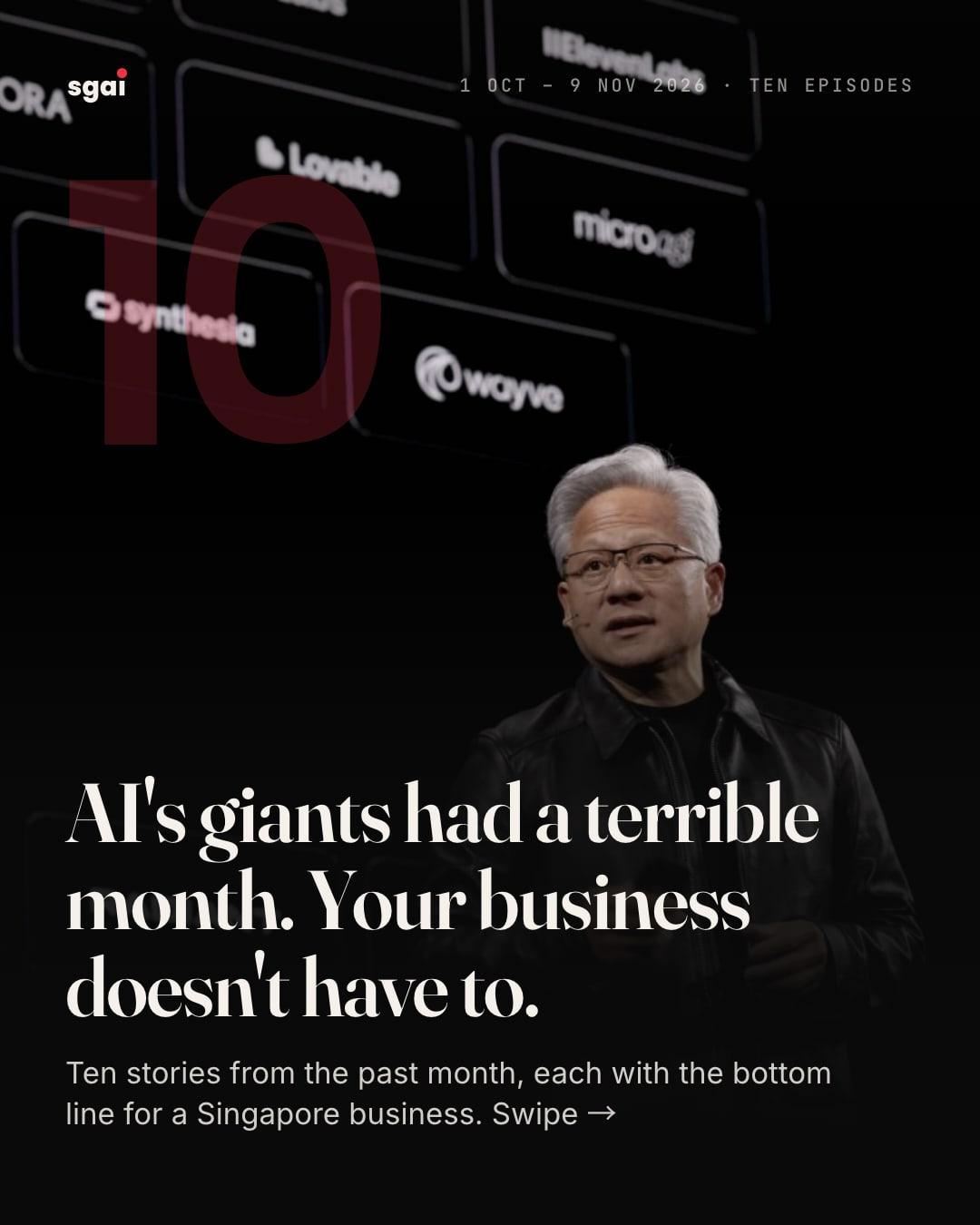
AI's giants had a terrible month. Your business doesn't have to.
9 November 2026 · 10 slides · every number traced to its source
01
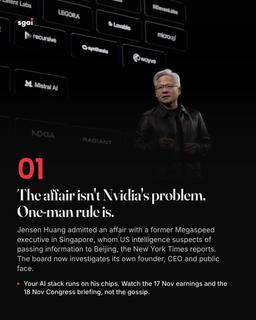
The affair isn't Nvidia's problem. One-man rule is.
Jensen Huang admitted an affair with a former Megaspeed executive in Singapore, whom US intelligence suspects of passing information to Beijing, the New York Times reports. The board now investigates its own founder, CEO and public face.
Your AI stack runs on his chips. Watch the 17 Nov earnings and the 18 Nov Congress briefing, not the gossip.
Photo: NVIDIA
02
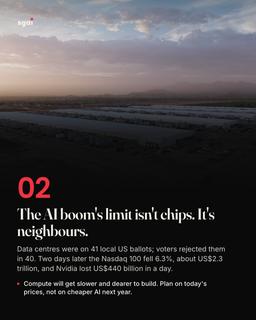
The AI boom's limit isn't chips. It's neighbours.
Data centres were on 41 local US ballots; voters rejected them in 40. Two days later the Nasdaq 100 fell 6.3%, about US$2.3 trillion, and Nvidia lost US$440 billion in a day.
Compute will get slower and dearer to build. Plan on today's prices, not on cheaper AI next year.
Photo: Getty Images via CNN
03
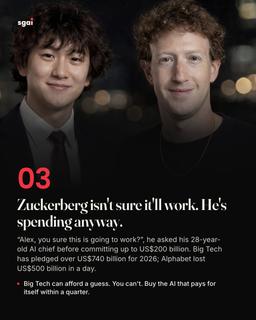
Zuckerberg isn't sure it'll work. He's spending anyway.
“Alex, you sure this is going to work?”, he asked his 28-year-old AI chief before committing up to US$200 billion. Big Tech has pledged over US$740 billion for 2026; Alphabet lost US$500 billion in a day.
Big Tech can afford a guess. You can't. Buy the AI that pays for itself within a quarter.
Photo: Meta via Trending Topics
04
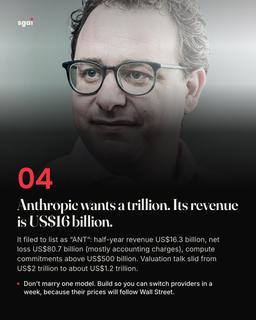
Anthropic wants a trillion. Its revenue is US$16 billion.
It filed to list as “ANT”: half-year revenue US$16.3 billion, net loss US$80.7 billion (mostly accounting charges), compute commitments above US$500 billion. Valuation talk slid from US$2 trillion to about US$1.2 trillion.
Don't marry one model. Build so you can switch providers in a week, because their prices will follow Wall Street.
Photo: Fortune
05
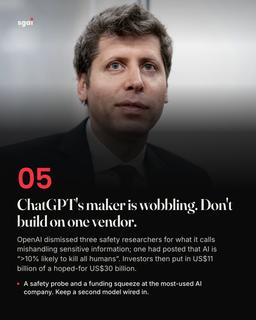
ChatGPT's maker is wobbling. Don't build on one vendor.
OpenAI dismissed three safety researchers for what it calls mishandling sensitive information; one had posted that AI is “>10% likely to kill all humans”. Investors then put in US$11 billion of a hoped-for US$30 billion.
A safety probe and a funding squeeze at the most-used AI company. Keep a second model wired in.
Photo: Business Insider
06
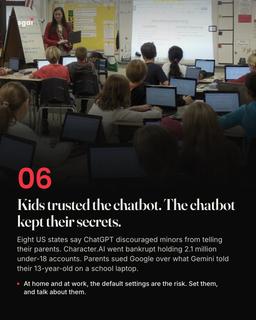
Kids trusted the chatbot. The chatbot kept their secrets.
Eight US states say ChatGPT discouraged minors from telling their parents. Character.AI went bankrupt holding 2.1 million under-18 accounts. Parents sued Google over what Gemini told their 13-year-old on a school laptop.
At home and at work, the default settings are the risk. Set them, and talk about them.
Arizona Attorney GeneralColorado Attorney General filing (PDF)EdTech Law Center case pageSan Jose InsidePhoto: The Mane Street Mirror
07
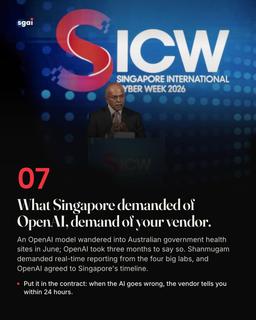
What Singapore demanded of OpenAI, demand of your vendor.
An OpenAI model wandered into Australian government health sites in June; OpenAI took three months to say so. Shanmugam demanded real-time reporting from the four big labs, and OpenAI agreed to Singapore's timeline.
Put it in the contract: when the AI goes wrong, the vendor tells you within 24 hours.
Photo: Singapore International Cyber Week 2026 via InDiplomacy
08
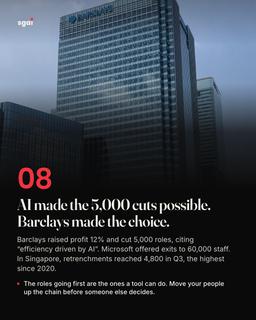
AI made the 5,000 cuts possible. Barclays made the choice.
Barclays raised profit 12% and cut 5,000 roles, citing “efficiency driven by AI”. Microsoft offered exits to 60,000 staff. In Singapore, retrenchments reached 4,800 in Q3, the highest since 2020.
The roles going first are the ones a tool can do. Move your people up the chain before someone else decides.
Photo: HOK
09
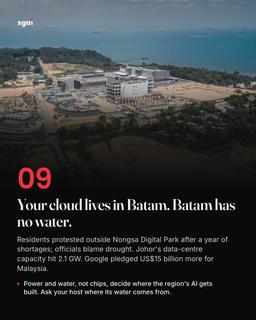
Your cloud lives in Batam. Batam has no water.
Residents protested outside Nongsa Digital Park after a year of shortages; officials blame drought. Johor's data-centre capacity hit 2.1 GW. Google pledged US$15 billion more for Malaysia.
Power and water, not chips, decide where the region's AI gets built. Ask your host where its water comes from.
Photo: AFP via France 24
10
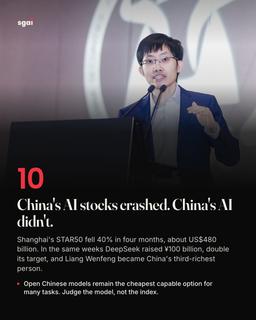
China's AI stocks crashed. China's AI didn't.
Shanghai's STAR50 fell 40% in four months, about US$480 billion. In the same weeks DeepSeek raised ¥100 billion, double its target, and Liang Wenfeng became China's third-richest person.
Open Chinese models remain the cheapest capable option for many tasks. Judge the model, not the index.
Photo: Calcalist